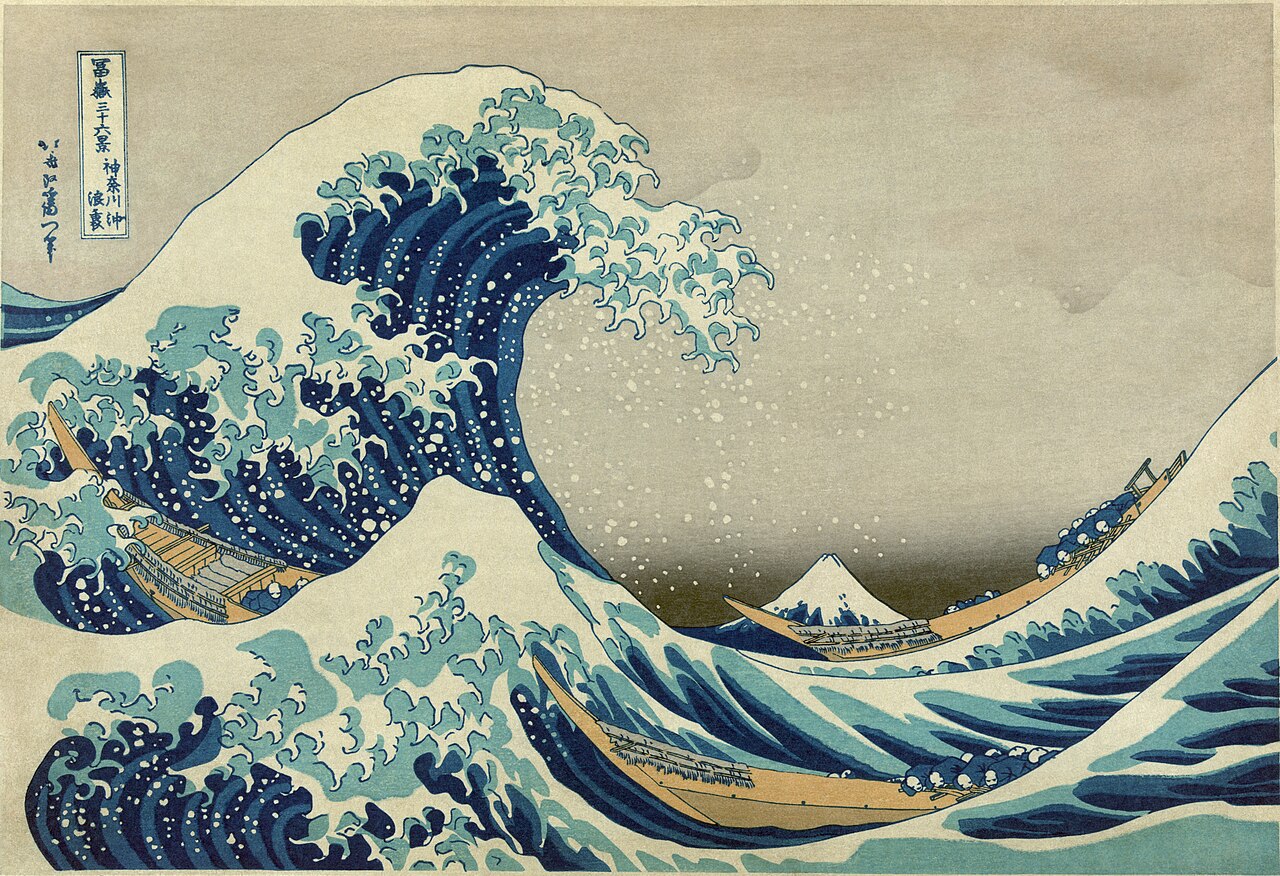
Katsushika Hokusai stands among the most widely recognized Japanese artists in world history. Working in Edo across a long career of name changes and restless invention, he helped push ukiyo-e from actor and beauty prints toward landscape as a serious popular subject. His series Thirty-six Views of Mount Fuji, published in the early 1830s, gave the mountain a graphic life that still travels: foam, boats, and Fuji under weather, printed in Prussian blue and layered color.
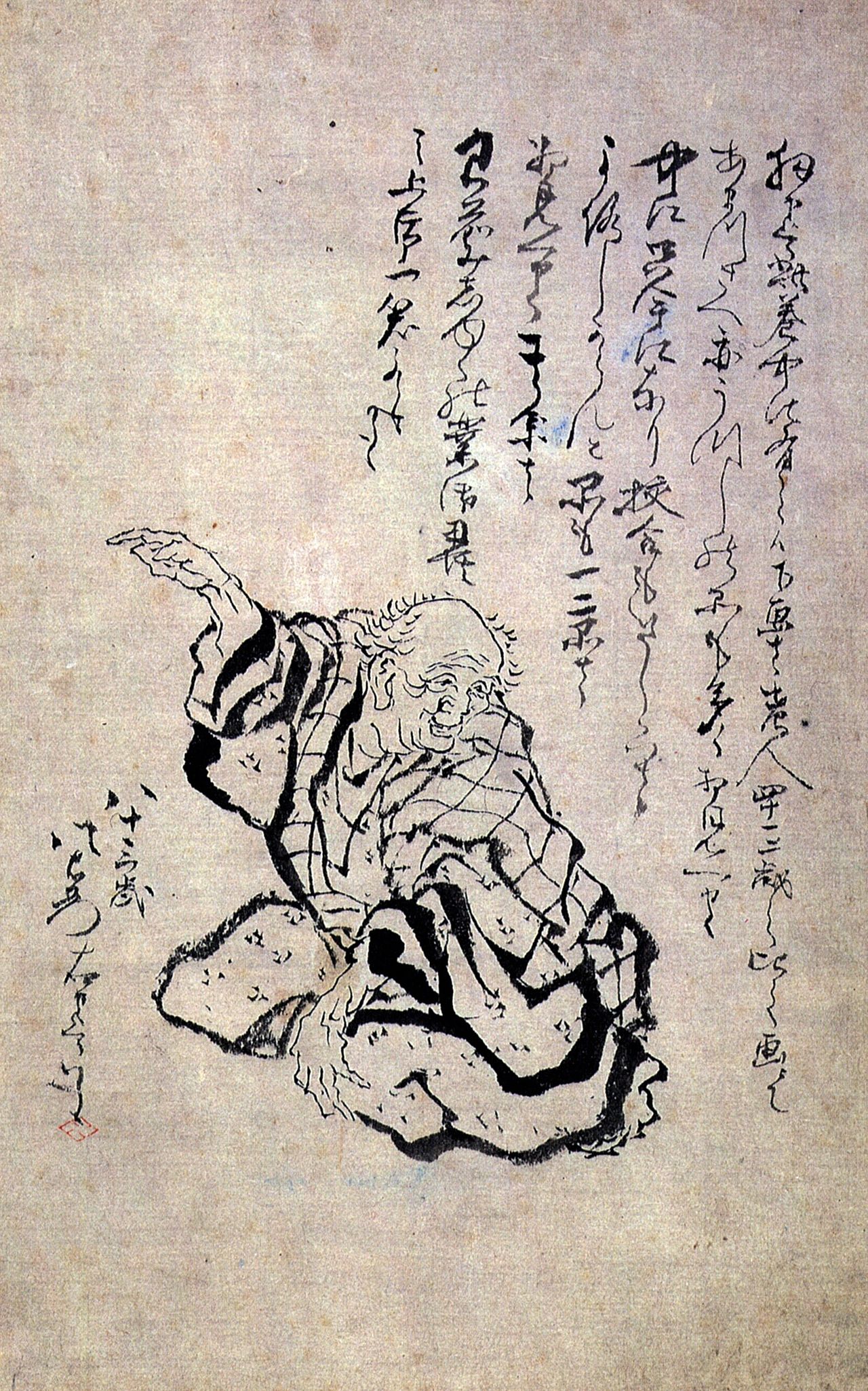
Look at the face of the work and the hand behind it. Scroll for life, lineage, and where American audiences met this name.
Life and work
Dates: 1760-1849. Place: Edo (Tokyo), Japan. Medium: Ukiyo-e woodblock prints, painting, illustrated books.
Born in 1760 in the Honjo district of Edo, Hokusai trained in the Katsukawa school under Katsukawa Shunsho and later absorbed Chinese painting ideas, European perspective tricks circulating in Japan, and the commercial pressure of the print market. He worked under many art names (Hokusai, Sori, Taito, Iitsu, Manji among them) and produced thousands of designs: single-sheet prints, surimono, manga sketch volumes, and paintings. Poverty and disaster marked his later years; the Great Tempo Famine and a studio fire are part of the documentary record. He kept drawing into old age, famously wishing for more decades to perfect his line. He died in Edo in 1849.
Signature works
Famous public works include Under the Wave off Kanagawa (often called The Great Wave), Fine Wind, Clear Morning (Red Fuji), and other sheets from Thirty-six Views of Mount Fuji. He also designed One Hundred Views of Mount Fuji in book form and the multi-volume Hokusai Manga, sketch inspirations that circulated widely among craftspeople and later Western collectors. These designs are among the best-documented Japanese prints in museum collections worldwide.
Who they inspired
Hokusai's influence runs through later ukiyo-e landscape, through Japonisme in nineteenth-century Europe, and into modern graphic design. Claude Monet collected Japanese prints; Vincent van Gogh wrote about and copied Japanese print compositions; Henri de Toulouse-Lautrec and the Nabis absorbed flat color and cropped framing. In Japan, later print designers and twentieth-century designers returned to his wave and Fuji silhouettes as shared visual memory. Manga as a word and as a sketch practice owes a debt to his published drawing books, even when the later comic industry diverges.
American / US crossover
American and European museums hold deep Hokusai collections, including major holdings at the Metropolitan Museum of Art, the Museum of Fine Arts, Boston, and the Art Institute of Chicago. Late nineteenth-century World's Fairs and dealer networks fed Japonisme into US collecting. The Great Wave became a US classroom staple and pop-culture reference without requiring a US residency; Hokusai himself did not work in America. The crossover is reception, museum display, and graphic afterlife.
Era door: Cities, prints, faiths