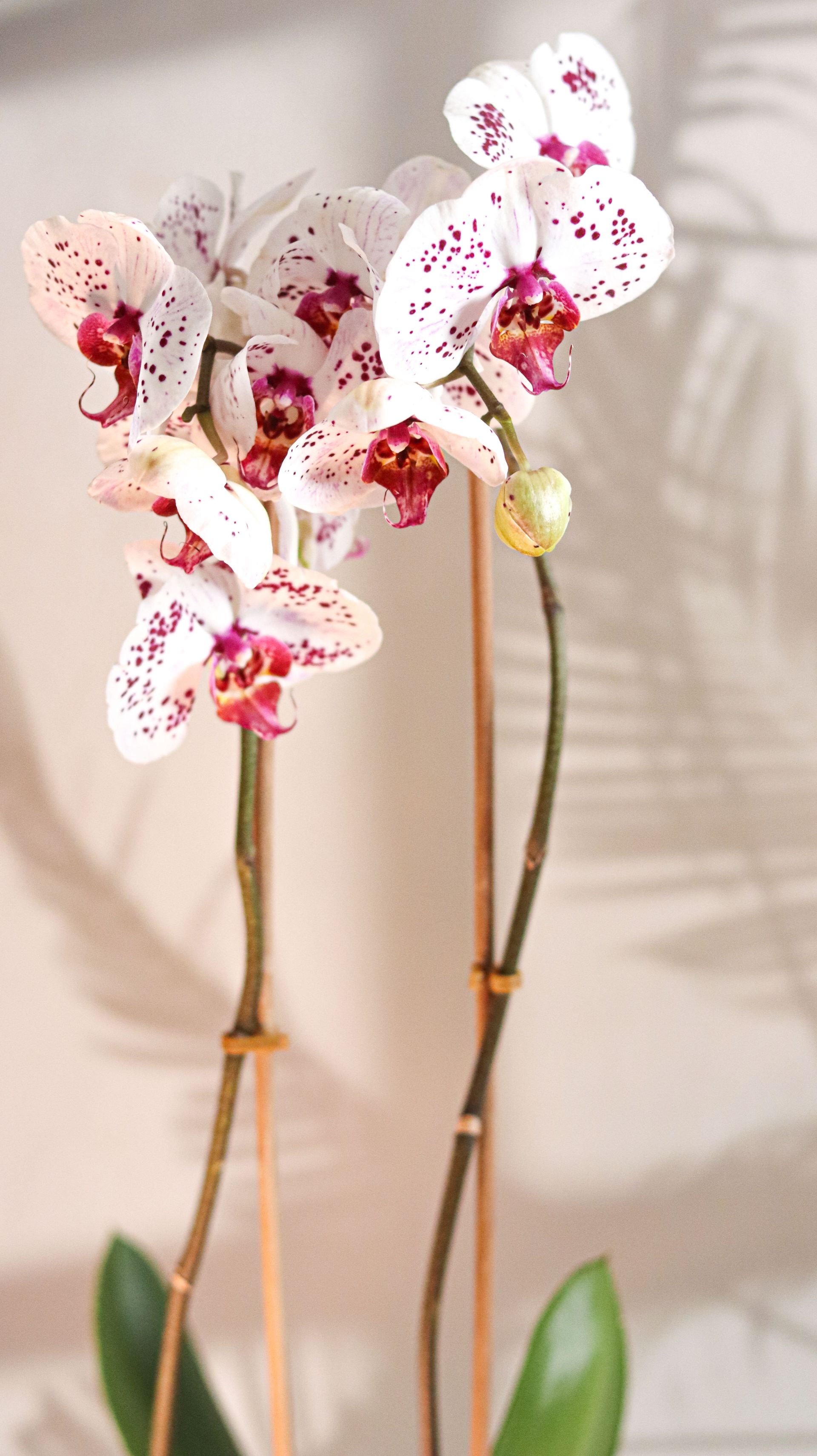
Along the way
Having met the artists, we follow what they returned to again and again: the mountain, the stroke of ink, the tea bowl, the moon. Each path teaches a way of looking.
An atlas of Asian ways of seeing
Twenty-two paths
A path is not a place. It is a subject Asian artists returned to for centuries: a mountain, a stroke of ink, a tea bowl, a moon. Each path moves through place, history, and the artists who shaped it, with the works you should know and a way to look at them. Every work here is from East and Southeast Asia.
Nature
Mountain, water, blossom, season, moon, and garden.
The Hand
Ink, the written word, clay, lacquer, cloth, and steel.
The Signature Path
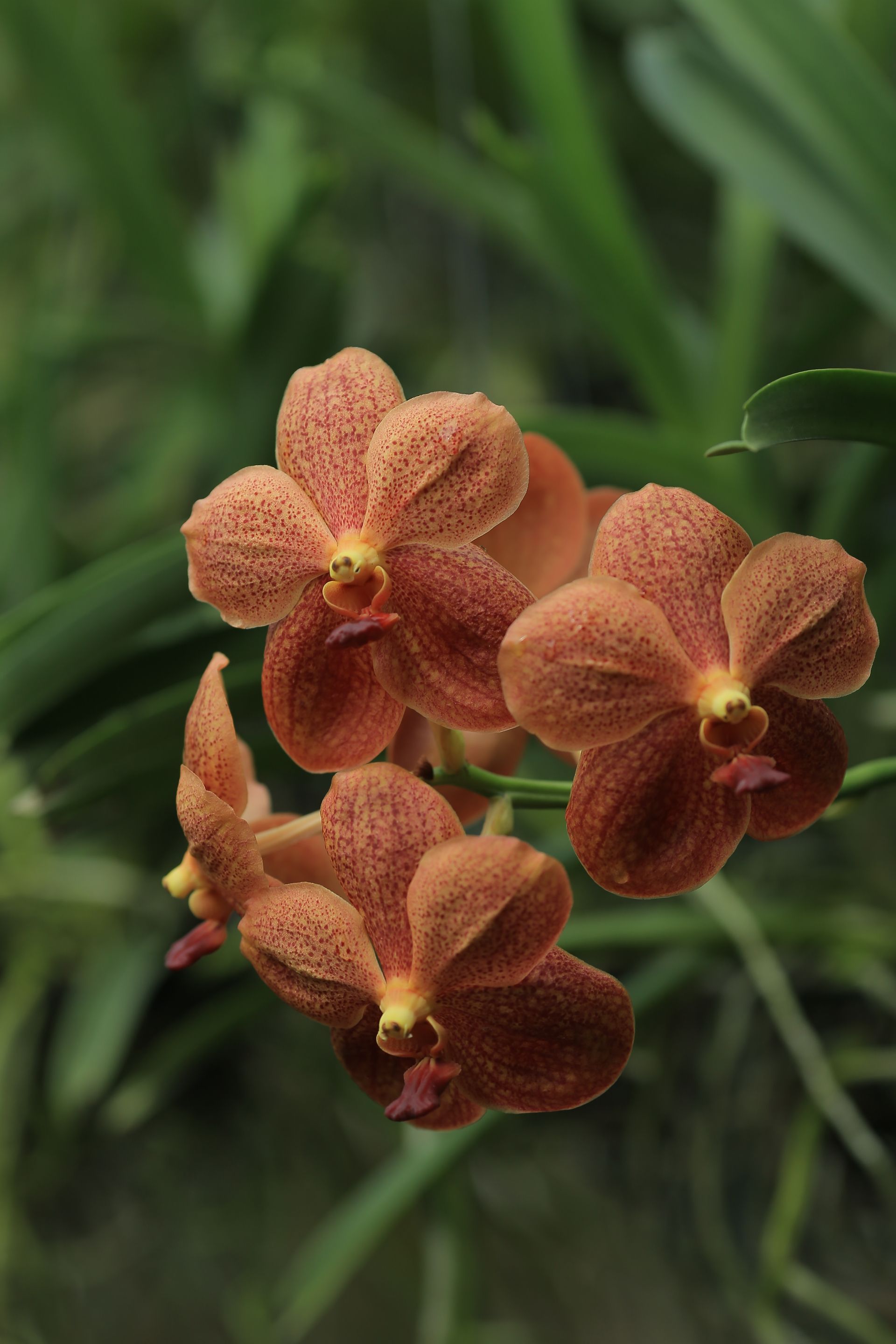
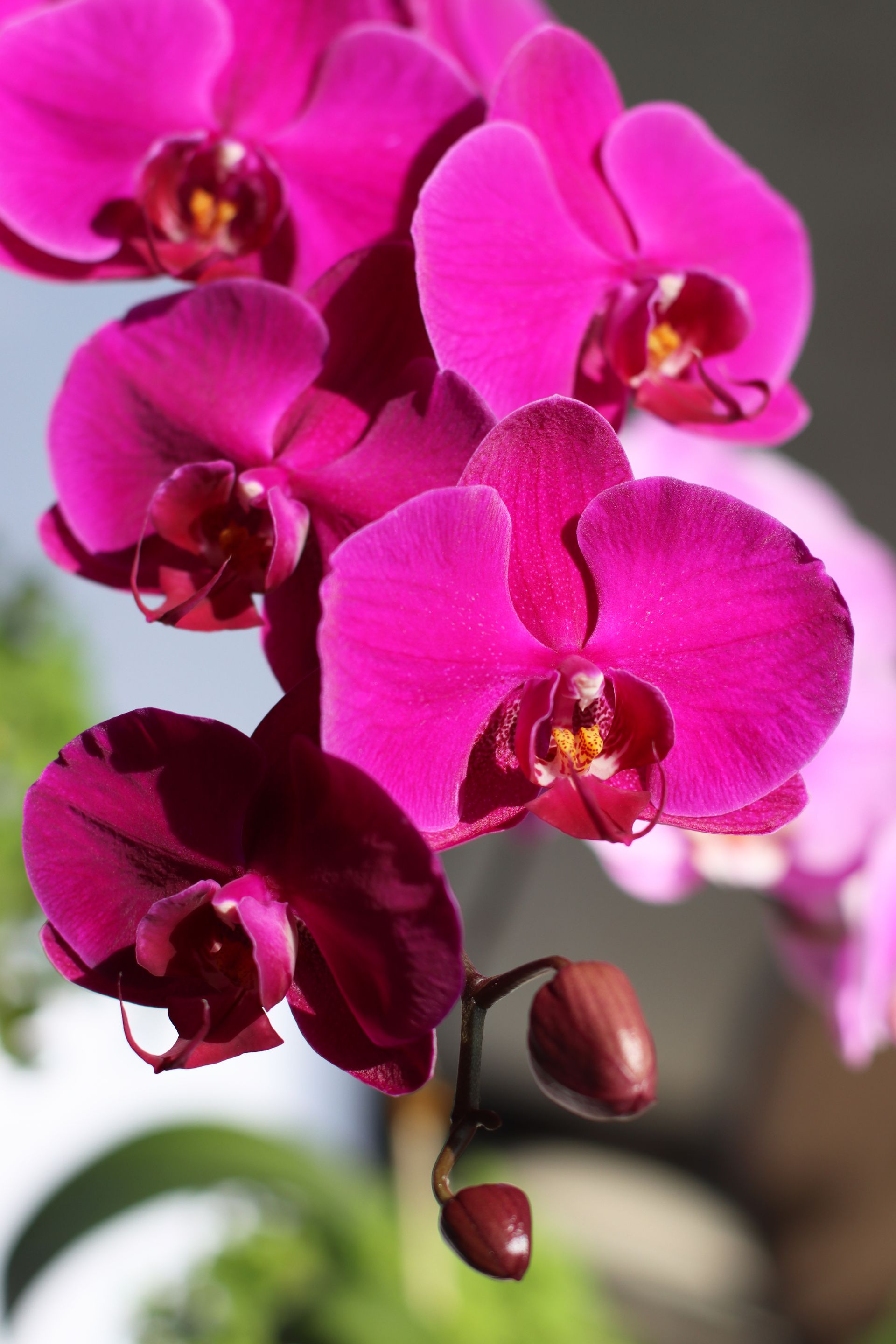
The Orchid
The flower that gave Orchid Way Collective its name.
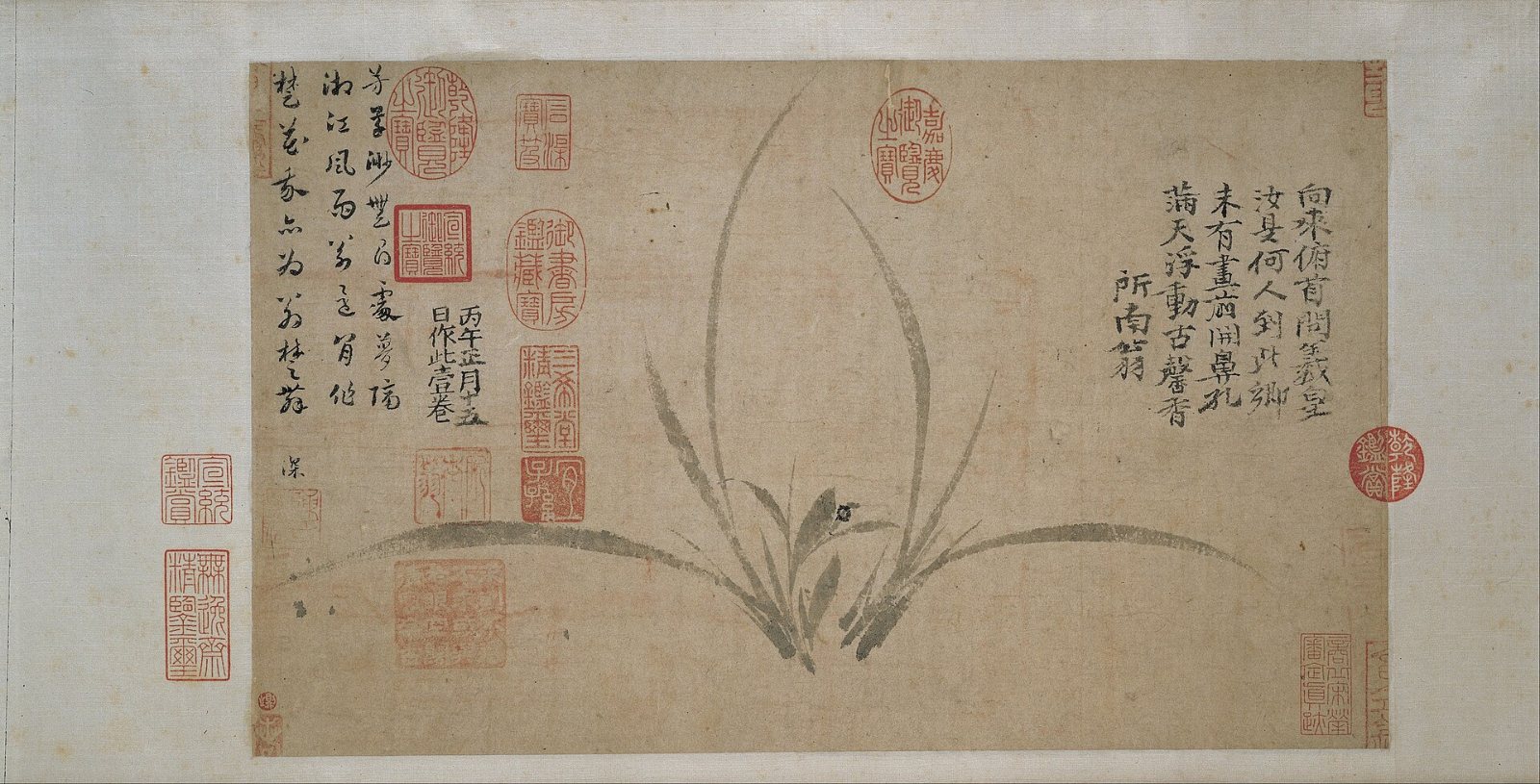
To cultivate character
The Orchid
In Chinese literati painting the orchid is not decoration. It stands for the cultivated person, fragrant in a quiet valley whether or not anyone passes by. Confucius compared the person of integrity to the orchid, and painters carried that idea for two thousand years.
After the Mongol conquest, the Song loyalist Zheng Sixiao painted orchids floating without soil. The land, he said, had been taken. A few strokes of ink became an act of conscience.
Zheng Sixiao, Ink Orchid, 1306. Osaka City Museum of Fine Arts.
Place
Southern China, Joseon Seoul, the studios of Kyoto
History
Song literati, Yuan loyalist painters, Ming and Qing painting manuals, Joseon scholar painting, modern ink
Artists
Zheng Sixiao, Ma Shouzhen, Yi Ha-eung, Qi Baishi
Works to know
- Ink OrchidZheng Sixiao, 1306, Osaka City Museum of Fine Arts
- Orchids and RocksYi Ha-eung (Heungseon Daewongun), 19th century, Korea
- The Mustard Seed Garden Manual of Paintingorchid volume, early 1700s, China
- The Four Gentlemenorchid, bamboo, plum, chrysanthemum, a subject painted across China, Korea, and Japan
Group I
Nature
Mountain, water, blossom, season, moon, and garden.
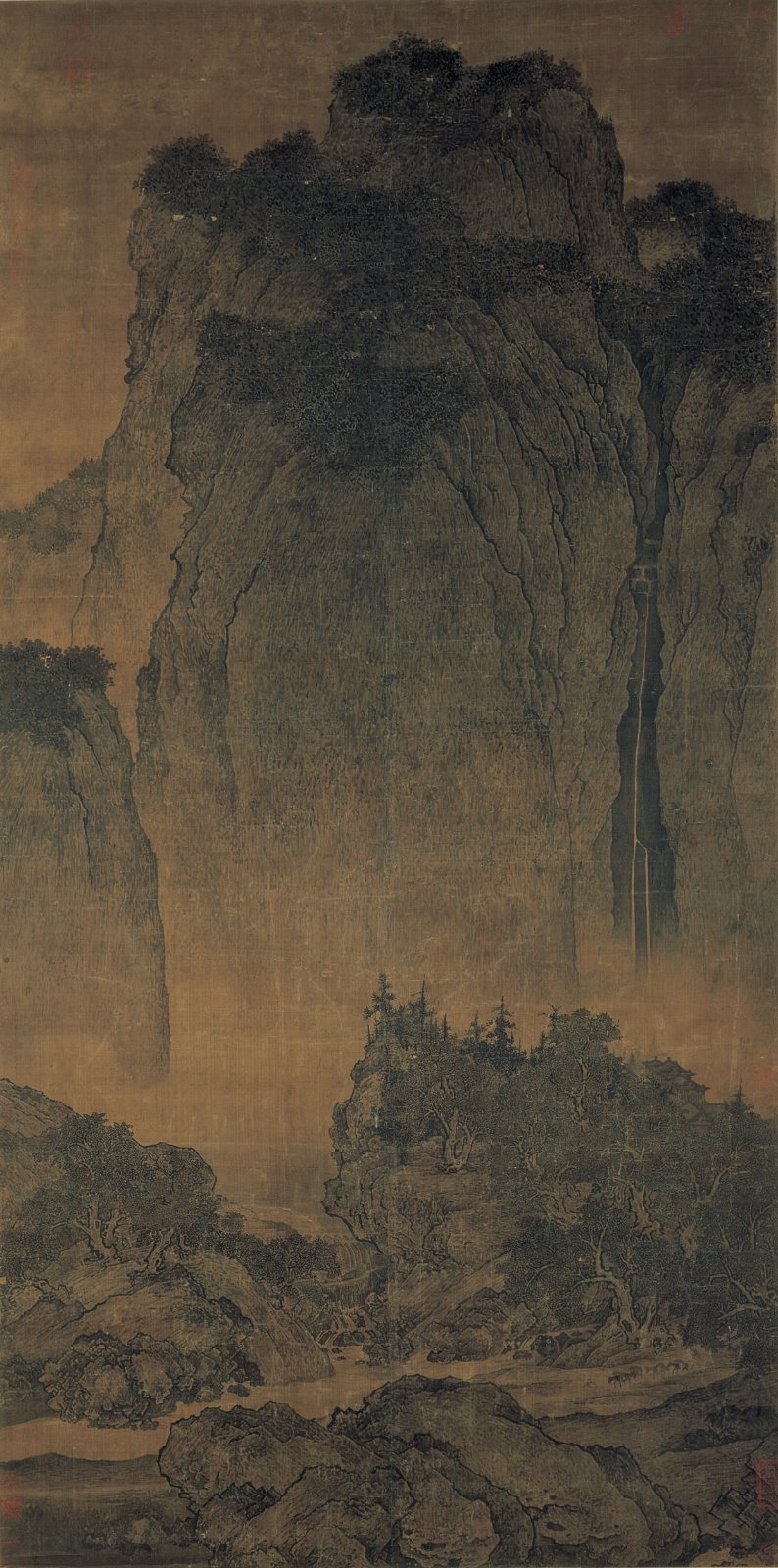
To understand scale
The Mountain
The Chinese word for landscape painting is shanshui, mountain and water. The mountain is not scenery. It is permanence, distance, and the place a scholar withdraws to think. Look for the tiny travellers at its foot: they give the mountain its scale.
Guo Xi wrote that a great landscape should be one you can travel through, gaze at, wander in, and live in. In Korea, Jeong Seon turned from imagined Chinese peaks to Korea’s own mountains, painted from direct observation.
Fan Kuan, Travelers Among Mountains and Streams, about 1000. National Palace Museum, Taipei.
Place
Northern China, Mount Geumgang in Korea, the ink studios of Japan
History
Northern Song monumental landscape, Southern Song intimacy, Joseon true-view painting, Muromachi ink
Artists
Fan Kuan, Guo Xi, Jeong Seon, Sesshū Tōyō
Works to know
- Travelers Among Mountains and StreamsFan Kuan, about 1000, National Palace Museum, Taipei
- Early SpringGuo Xi, 1072, National Palace Museum, Taipei
- Complete View of Mount GeumgangJeong Seon, 1734, Leeum Museum of Art, Seoul
- Autumn and Winter LandscapesSesshū Tōyō, late 15th century, Tokyo National Museum
How to look
Find the smallest human figure. Then notice how mist divides near, middle, and far.
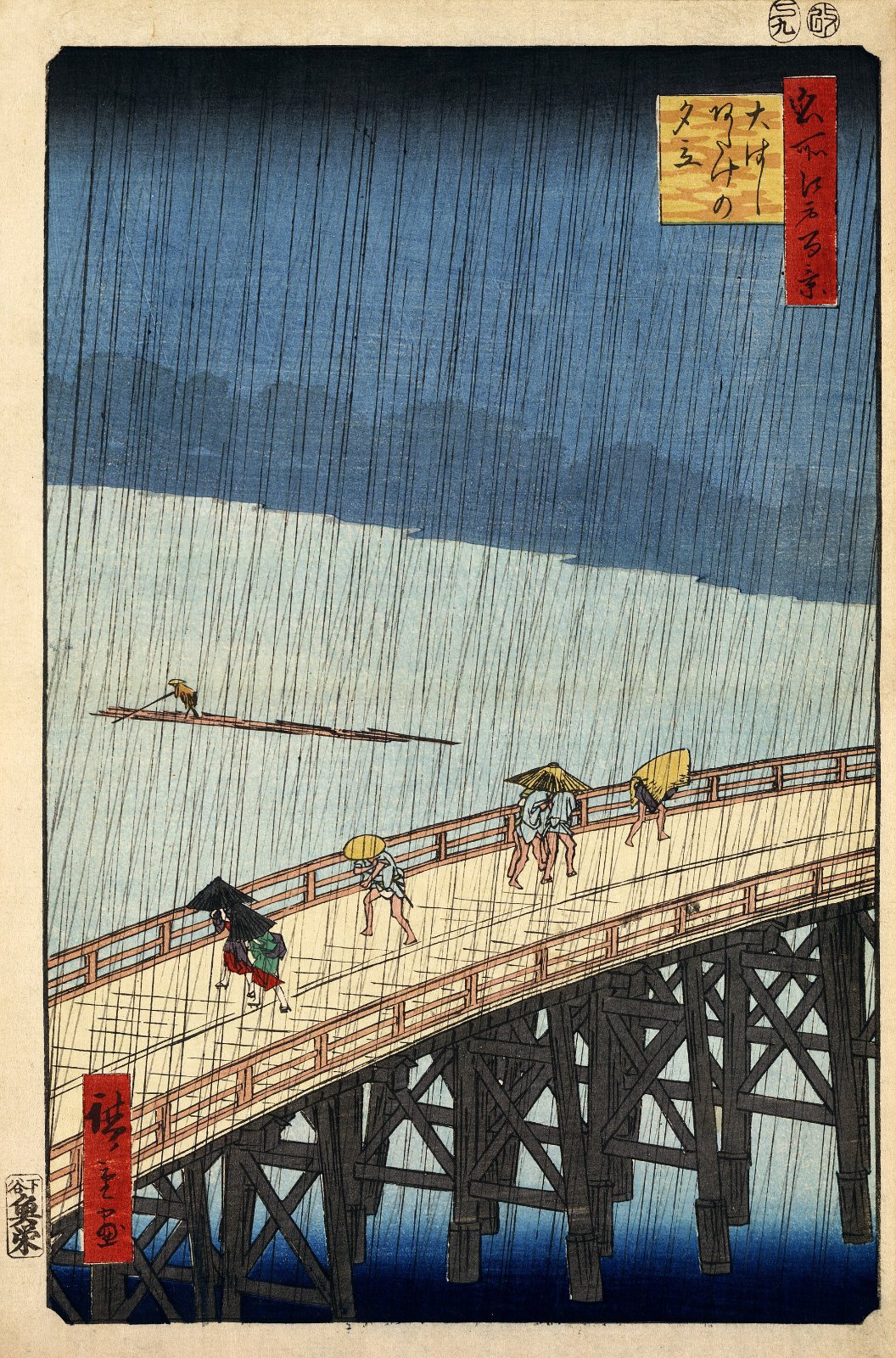
To observe movement
Water
Water has no fixed shape, which is exactly why Asian painters returned to it. In 1222 the Song court painter Ma Yuan filled an album with nothing but water: twelve moods of ripple, swell, and flood.
Six centuries later Hiroshige drew rain as fine dark lines slicing across a bridge in Edo. Vincent van Gogh copied the print in 1887. Hokusai made a single wave into one of the most recognized images on earth.
Utagawa Hiroshige, Sudden Shower over Shin-Ōhashi Bridge and Atake, 1857.
Place
The Yangtze, the Sumida River in Edo, the bays of Matsushima
History
Song court painting, Rinpa screens, Edo woodblock prints
Artists
Ma Yuan, Tawaraya Sōtatsu, Katsushika Hokusai, Utagawa Hiroshige
Works to know
- Twelve Views of WaterMa Yuan, 1222, Palace Museum, Beijing
- Waves at MatsushimaTawaraya Sōtatsu, 17th century, Freer Gallery of Art, Smithsonian
- Under the Wave off KanagawaKatsushika Hokusai, about 1831, Japan
- Sudden Shower over Shin-Ōhashi Bridge and AtakeUtagawa Hiroshige, 1857, One Hundred Famous Views of Edo
How to look
Rain as line, wave as claw, current as pattern. Ask how the artist made something moving hold still.
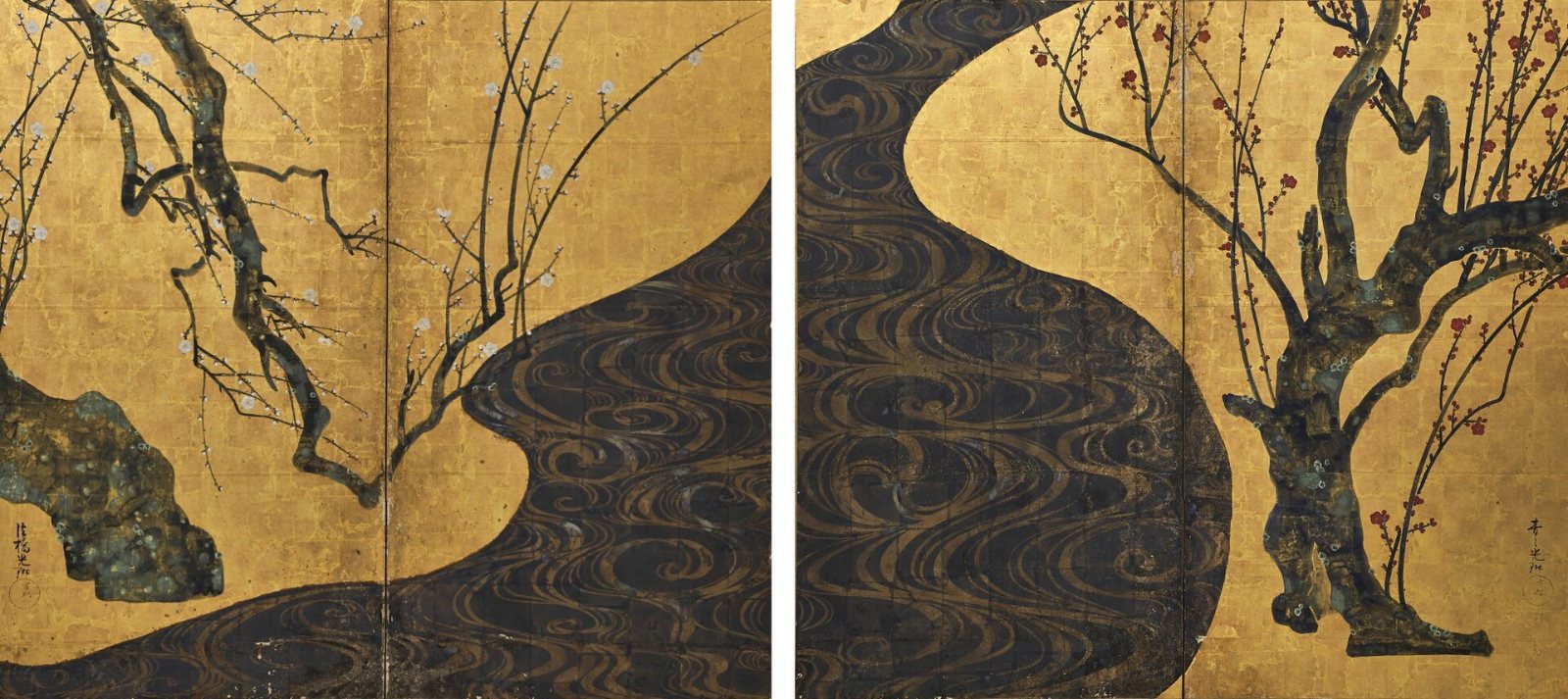
To notice impermanence
The Blossom
Across Asia, flowers are a language. The plum blooms in the cold and means endurance. The lotus rises clean from mud and means purity in Buddhist art. The peony means prosperity. The cherry blossom, gone within days, carries the Japanese feeling of mono no aware, the gentle sorrow of passing things.
Chinese bird-and-flower painting became its own great category at the Song court. In Japan, Ogata Kōrin set two plum trees on gold with a stylized river flowing between them, turning a garden into pure design.
Ogata Kōrin, Red and White Plum Blossoms, early 18th century. MOA Museum of Art, Atami.
Place
Kyoto, Edo, the imperial gardens of Kaifeng, Seoul
History
Song bird-and-flower painting, Rinpa design, Edo prints, modern ink
Artists
Ogata Kōrin, Utagawa Hiroshige, Qi Baishi
Works to know
- Red and White Plum BlossomsOgata Kōrin, early 18th century, MOA Museum of Art, Atami
- IrisesOgata Kōrin, about 1701 to 1705, Nezu Museum, Tokyo
- Plum Park in KameidoUtagawa Hiroshige, 1857, One Hundred Famous Views of Edo
- Flower and insect paintingsQi Baishi, 20th century, China
How to look
Which flower is it, and what season does it name? Is it painted as nature, or as emblem?
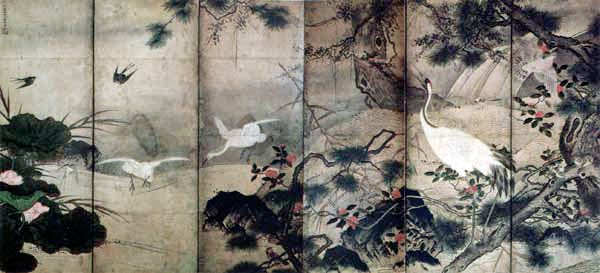
To feel time pass
The Four Seasons
Japanese folding screens often read from right to left as a year: spring blossoms, summer grasses, autumn maples, winter snow. To stand before them is to watch time move.
The habit runs through East Asian art and poetry. Haiku must carry a season word. Guo Xi titled his masterpiece Early Spring. Hiroshige’s One Hundred Famous Views of Edo was arranged by season.
Attributed to Sesshū Tōyō, Birds and Flowers of the Four Seasons, late 15th century.
Place
Kyoto temples and residences, the Edo of Hiroshige
History
Chinese seasonal landscape, Muromachi screens, Edo print series
Artists
Sesshū Tōyō, Guo Xi, Utagawa Hiroshige
Works to know
- Birds and Flowers of the Four Seasonsattributed to Sesshū Tōyō, late 15th century, Japan
- Early SpringGuo Xi, 1072, National Palace Museum, Taipei
- One Hundred Famous Views of EdoUtagawa Hiroshige, 1856 to 1858, Japan
How to look
Read the screen like a sentence. Where does spring begin, and where does winter end?
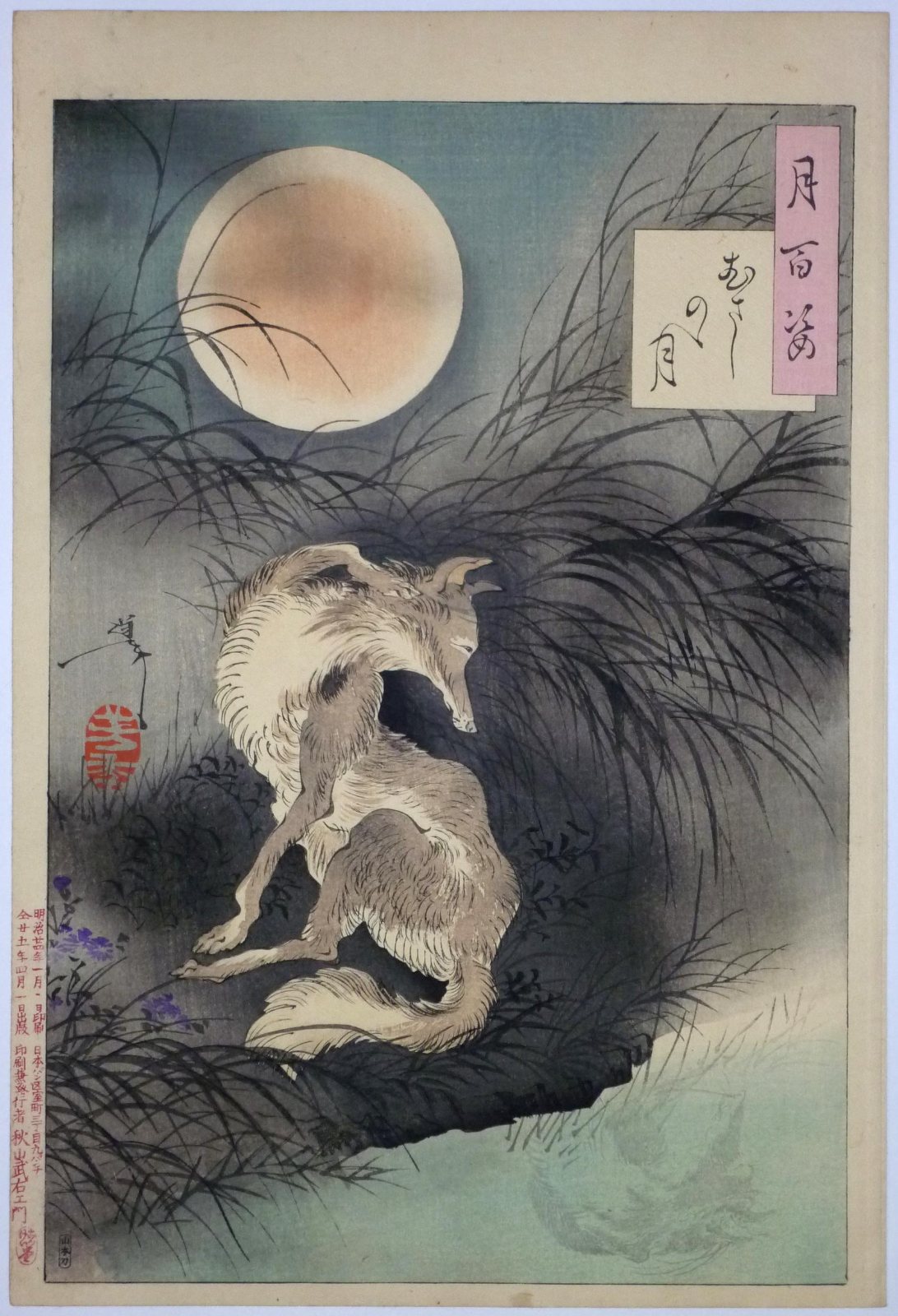
To look up
The Moon
The full moon gathers families across Asia: the Mid-Autumn Festival in China and Vietnam, Chuseok in Korea, tsukimi moon-viewing in Japan. Poets from Li Bai onward wrote of the same moon shining on those far from home.
Tsukioka Yoshitoshi spent his last years on One Hundred Aspects of the Moon, a series of one hundred woodblock prints. Warriors, ghosts, poets, and a lone fox all share a single moon.
Tsukioka Yoshitoshi, Moon on Musashi Plain, from One Hundred Aspects of the Moon, 1885 to 1892.
Place
Moon-viewing platforms of Kyoto, courtyards of Seoul and Hanoi
History
Tang poetry, Heian court moon-viewing, Meiji woodblock prints
Artists
Li Bai, Tsukioka Yoshitoshi
Works to know
- One Hundred Aspects of the MoonTsukioka Yoshitoshi, 1885 to 1892, Japan
- Quiet Night ThoughtLi Bai, 8th century, poem, China
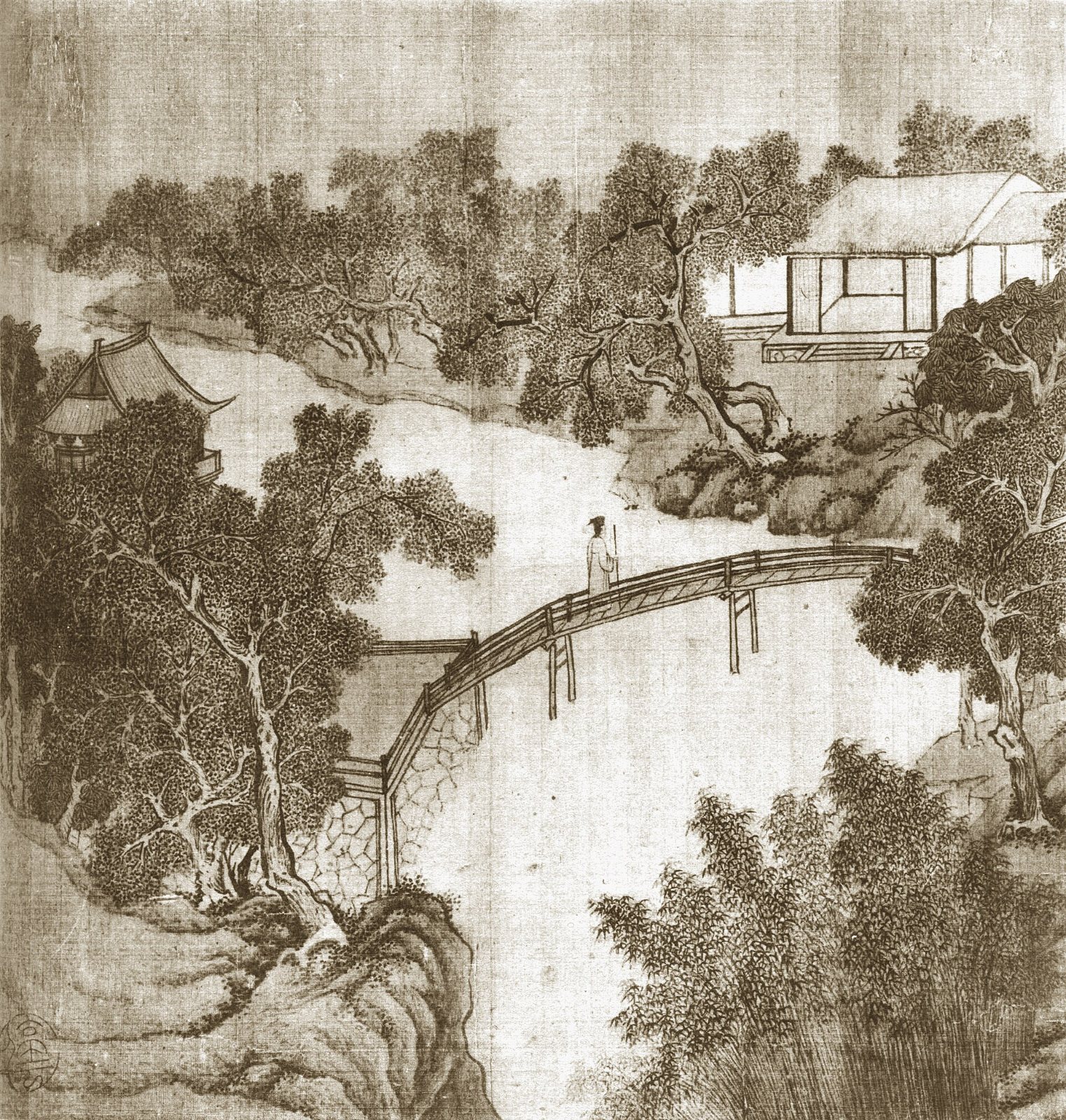
To contemplate
The Garden
A Chinese scholar garden is a painting you can walk into. In Suzhou, rocks stand for mountains, ponds for lakes, and every pavilion carries a name taken from poetry. Wen Zhengming painted the Garden of the Humble Administrator scene by scene, pairing each view with verse.
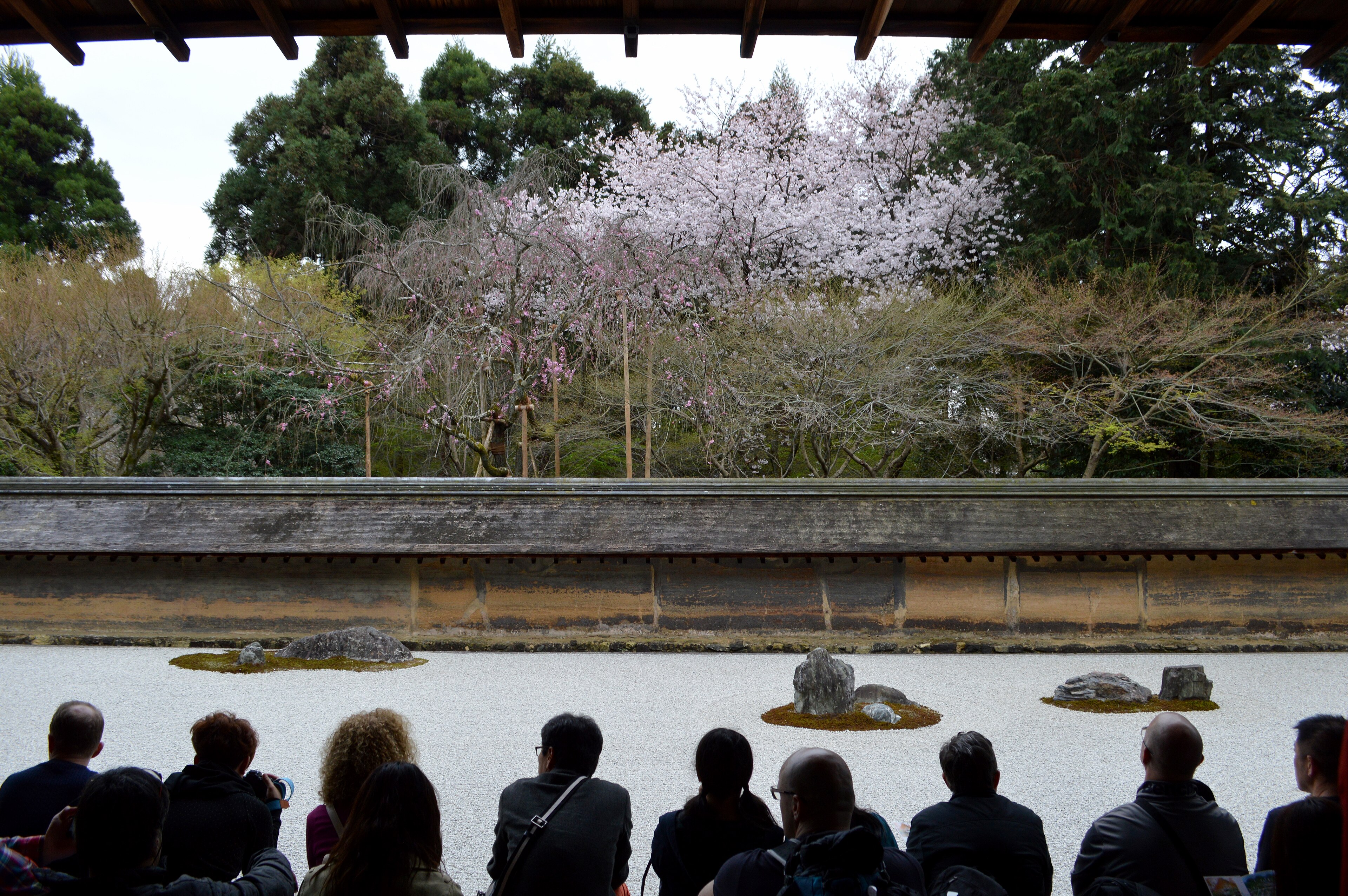
Japan distilled the idea into raked gravel and stone at Ryōan-ji. In Korea, the garden of Soswaewon was built for a scholar who withdrew from court, framed by bamboo and a mountain stream.
Wen Zhengming, leaf from an album of the Garden of the Humble Administrator, Ming dynasty.
Place
Suzhou, Kyoto, Damyang in Korea
History
Ming scholar gardens, Zen dry landscapes, Joseon retreat gardens
Artists
Wen Zhengming, Sesshū Tōyō, Jeong Seon
Works to know
- Garden of the Humble Administrator albumWen Zhengming, 16th century, China
- Rock garden of Ryōan-jiZen temple garden, late 15th century, Kyoto
- Soswaewon gardenJoseon retreat garden, 16th century, Damyang, Korea
How to look
Where is the viewer meant to sit? What has been hidden so that it can be discovered?
Group II
The Hand
Ink, the written word, clay, lacquer, cloth, and steel.
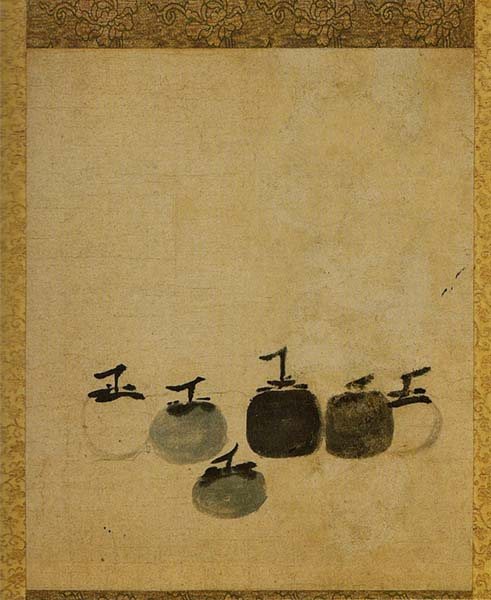
To follow gesture
Ink
An ink stroke cannot be erased. It records the speed, pressure, and confidence of a single moment, which is why East Asian painters trained for a lifetime before they trusted a brush.
The Chan monk Muqi painted six persimmons in a few breaths. The painting has been treasured in a Kyoto temple for centuries and shaped the Zen ink painting of Japan. Sesshū’s splashed-ink landscapes and Kim Jeong-hui’s Sehando carry the same conviction.
Muqi, Six Persimmons, 13th century. Ryōkō-in, Daitoku-ji, Kyoto.
Place
Hangzhou monasteries, Kyoto temples, Joseon exile on Jeju Island
History
Southern Song Chan painting, Muromachi Zen ink, Joseon literati painting
Artists
Muqi, Liang Kai, Sesshū Tōyō, Kim Jeong-hui
Works to know
- Six PersimmonsMuqi, 13th century, Ryōkō-in, Daitoku-ji, Kyoto
- Immortal in Splashed InkLiang Kai, early 13th century, Tokyo National Museum
- Splashed-Ink LandscapeSesshū Tōyō, 1495, Tokyo National Museum
- Sehando (Winter Scene)Kim Jeong-hui, 1844, National Museum of Korea
How to look
Follow one stroke from where the brush lands to where it lifts. Wet or dry? Fast or slow?
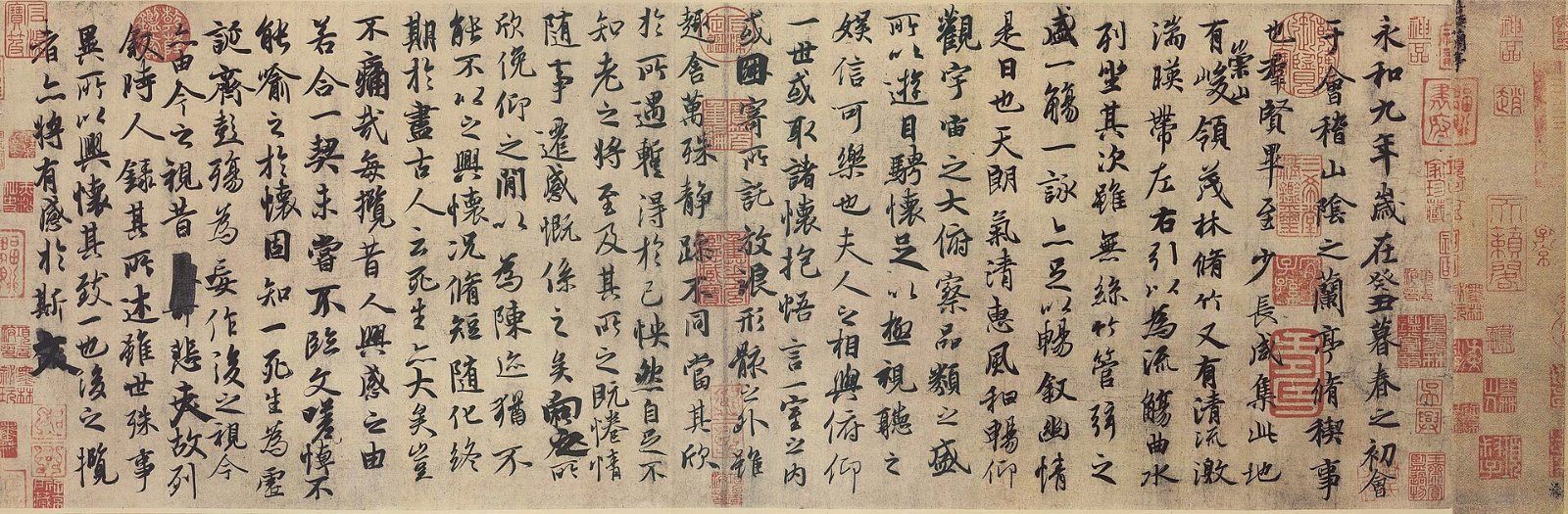
To read an image
The Written Word
In East Asia, calligraphy stood above painting. The most famous work of writing in Chinese history begins with an orchid: in 353, Wang Xizhi gathered friends at the Orchid Pavilion, and wrote a preface to their poems. The original is lost. Tang copies preserve it.
Korea created its own script, Hangul, announced in 1446 so that ordinary people could read. Kim Jeong-hui later invented a calligraphic style so distinct it carries his pen name, Chusa.
Wang Xizhi, Preface to the Orchid Pavilion Poems, Tang dynasty copy after the original of 353. Palace Museum, Beijing.
Place
Shaoxing, the Joseon court, the Zen temples of Japan
History
Jin dynasty calligraphy, Tang cursive, Joseon script reform, Japanese Zen calligraphy
Artists
Wang Xizhi, Huaisu, King Sejong’s scholars, Kim Jeong-hui
Works to know
- Preface to the Orchid Pavilion PoemsWang Xizhi, 353, known through Tang copies, Palace Museum, Beijing
- AutobiographyHuaisu, 777, National Palace Museum, Taipei
- Hunminjeong-eum Haeryethe Hangul proclamation, 1446, Kansong Art Museum, Seoul
How to look
You do not need to read the characters. Watch the rhythm, the pressure, the space between lines.
To see the maker’s hand
The Tea Bowl
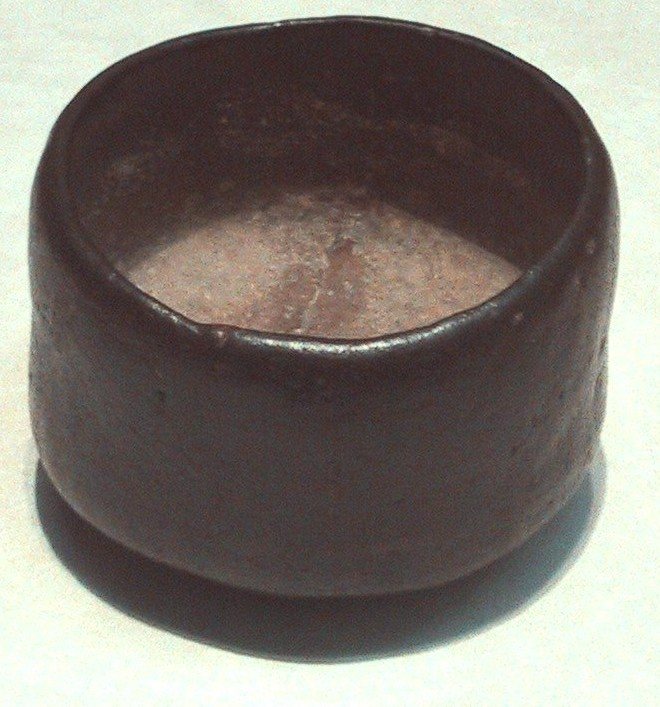
For the tea master Sen no Rikyū, a bowl should be humble, quiet, and made by hand. The potter Chōjirō shaped Raku bowls without a wheel, leaving the marks of fingers in the clay.
Japanese tea masters also prized plain rice bowls made in Joseon Korea. One of them, the Kizaemon Ido bowl, is now a National Treasure in Kyoto. From Song China came dark Jian ware bowls, whose glaze can shimmer like a night sky.
Black Raku tea bowl named Amadera, Momoyama period, Japan.
Place
Kyoto tea rooms, Joseon kilns, the Jian kilns of Fujian
History
Song tea culture, the way of tea under Sen no Rikyū, wabi aesthetics
Artists
Chōjirō, Joseon potters, Jian ware potters
Works to know
- Kizaemon Ido tea bowlJoseon Korea, 16th century, Kohō-an, Daitoku-ji, Kyoto
- Yōhen tenmoku tea bowlJian ware, Southern Song, 12th to 13th century, Seikadō Bunko Art Museum, Tokyo
- Black Raku tea bowlsChōjirō, late 16th century, Japan
How to look
Imagine holding it. Feel the weight, the uneven rim, the pool of glaze at the bottom.
To see form hold space
The Vessel
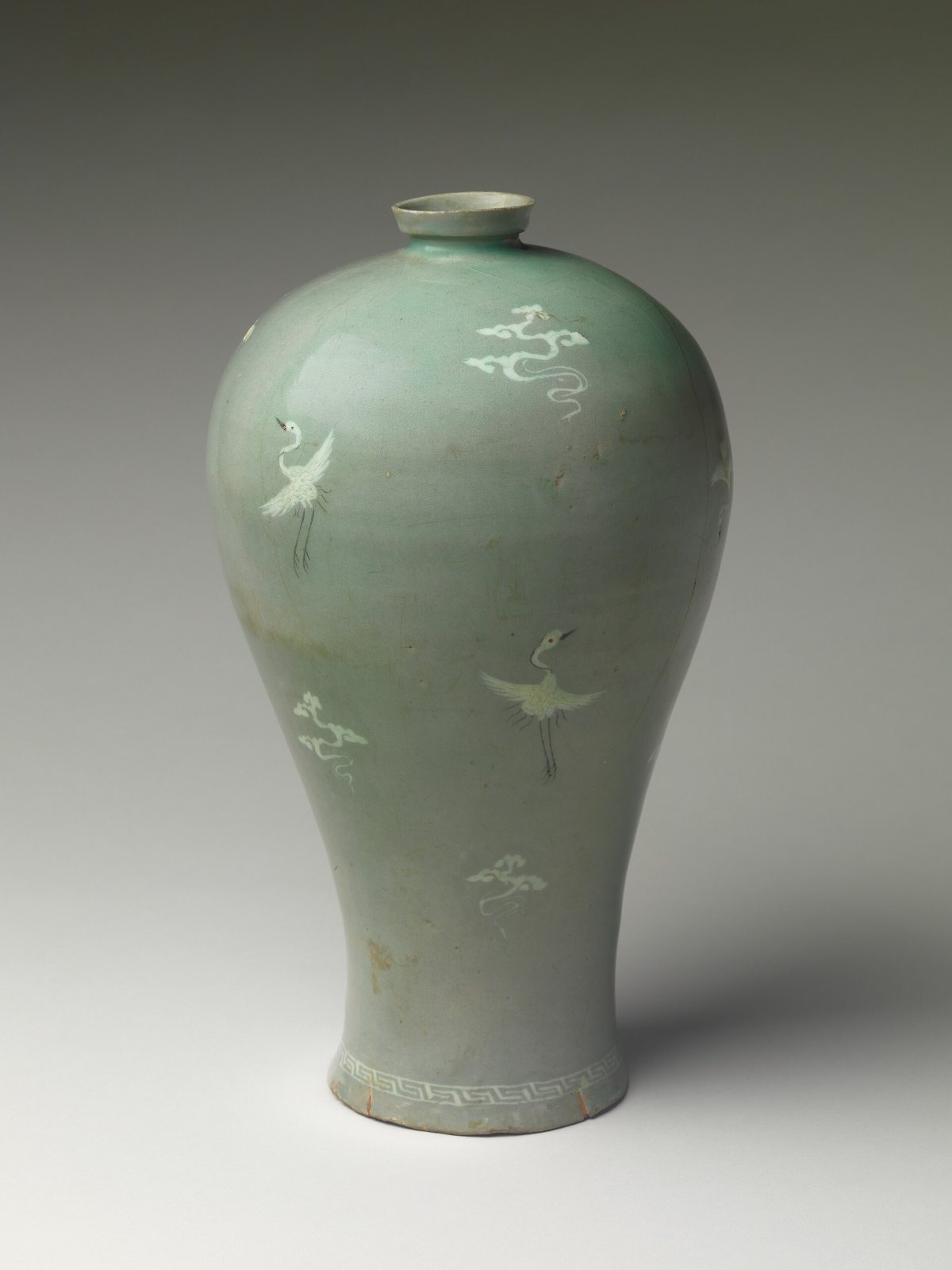
Goryeo potters invented a way to inlay white and black clay into celadon, so cranes could fly through a sea-green glaze. Chinese visitors praised Goryeo celadon as among the finest under heaven.
Ming blue-and-white porcelain travelled the sea routes to Southeast Asia and far beyond. Vietnamese potters at Chu Đậu made their own. The Joseon moon jar, full and slightly uneven, shows how much beauty a plain white form can hold.
Maebyeong vase with inlaid cranes and clouds, Goryeo dynasty, 12th to 13th century. Kansong Art Museum, Seoul.
Place
Gangjin kilns in Korea, Jingdezhen, the Red River Delta
History
Song and Goryeo celadon, Ming porcelain trade, Joseon white wares
Artists
Goryeo, Jingdezhen, and Chu Đậu potters
Works to know
- Maebyeong with inlaid cranes and cloudsGoryeo, 12th to 13th century, Kansong Art Museum, Seoul
- Ru ware narcissus basinNorthern Song, early 12th century, National Palace Museum, Taipei
- Moon jarJoseon, 18th century, National Museum of Korea
- Blue-and-white waresChu Đậu, Vietnam, 15th to 16th century, Vietnam
How to look
Look at the silhouette first, then the surface, then the tiny flaws the kiln left behind.
To see patience
Lacquer
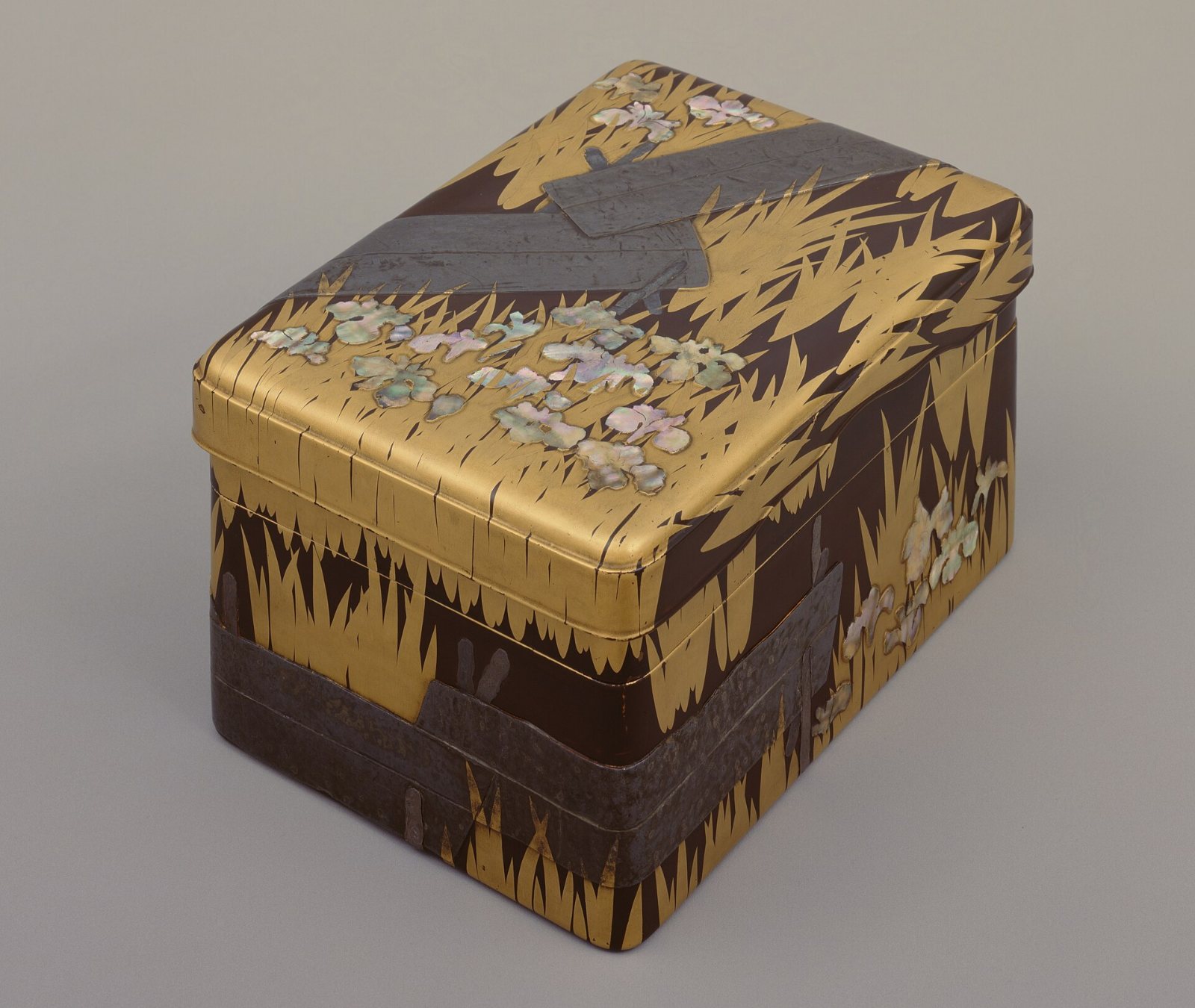
Lacquer is tree sap, applied in dozens of thin coats, each one dried and polished before the next. A single box can take a year. Japanese maki-e sprinkles gold into the wet surface, and Kōrin added lead and mother-of-pearl to make bridges and irises rise from black.
Chinese artisans carved thick layers of red lacquer into landscapes. Korean makers set shimmering shell into black grounds. In the 20th century, Vietnamese painters such as Nguyễn Gia Trí turned lacquer into a modern painting medium.
Ogata Kōrin, Writing Box with Eight Bridges design, early 18th century. Tokyo National Museum.
Place
Kyoto, Beijing, Tongyeong in Korea, Hanoi
History
Chinese carved lacquer, Japanese maki-e, Korean mother-of-pearl, Vietnamese sơn mài
Artists
Ogata Kōrin, Nguyễn Gia Trí
Works to know
- Writing Box with Eight Bridges designOgata Kōrin, early 18th century, Tokyo National Museum
- Carved red lacquerMing and Qing China, 15th to 18th century, China
- Mother-of-pearl lacquer boxesGoryeo and Joseon, Korea
- Lacquer paintingsNguyễn Gia Trí, 20th century, Vietnam
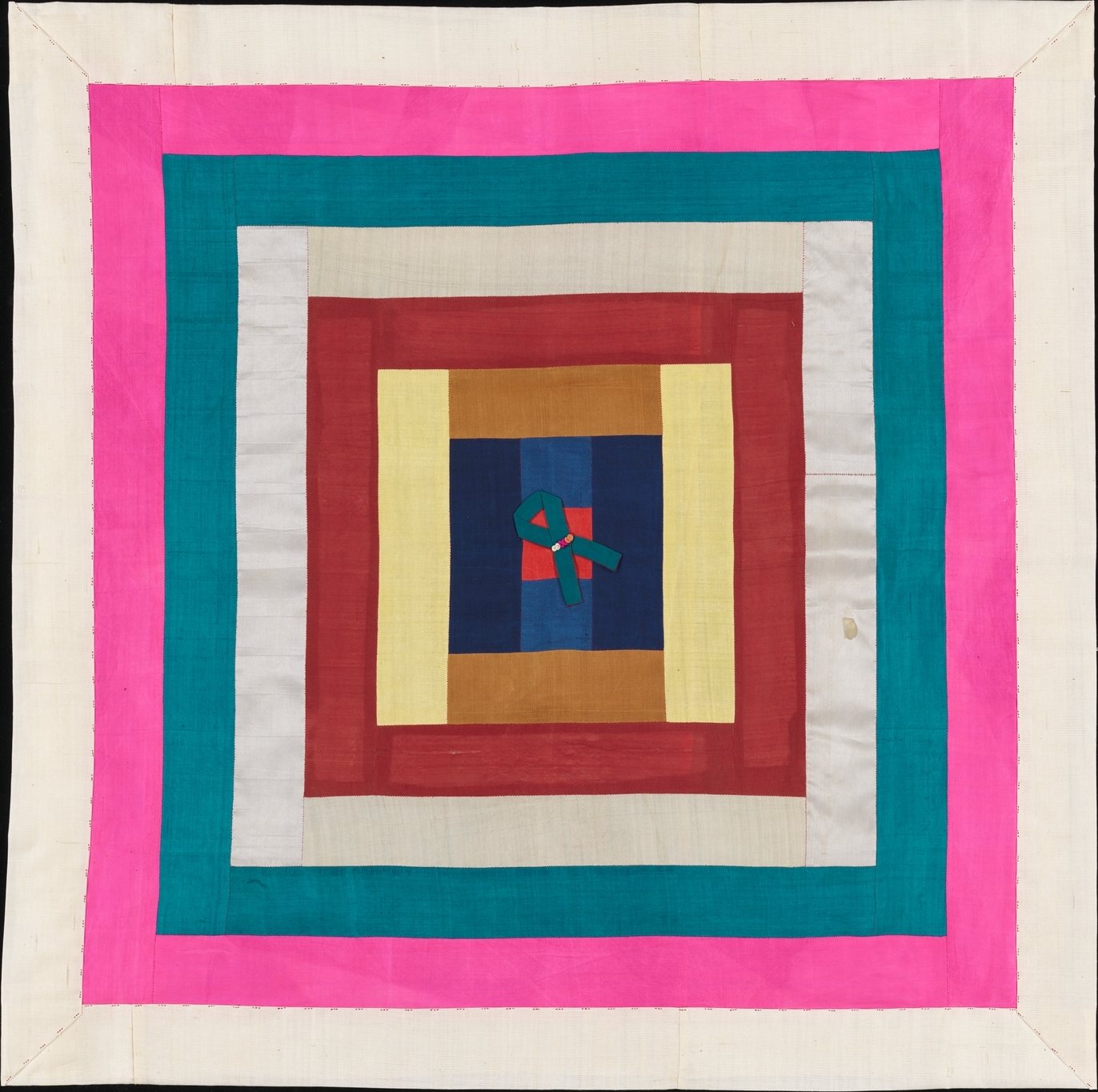
To follow pattern and memory
The Textile
Korean women stitched leftover silk and ramie into bojagi, wrapping cloths used to carry gifts and store precious things. Made without a plan, they look startlingly modern, and they carried a wish for good fortune in every seam.
Across Asia, cloth records who you are. Javanese batik is drawn in wax, dyed, and drawn again. The T’boli of Mindanao weave t’nalak from abacá fiber in patterns said to come from dreams. Chinese imperial robes mapped the cosmos in silk.
Patchwork bojagi (wrapping cloth), Joseon dynasty, Korea.
Place
Seoul, Java, Lake Sebu in Mindanao, the Forbidden City
History
Joseon domestic arts, Javanese court batik, Philippine weaving, Qing court dress
Artists
Unnamed women makers of Korea, Java, and Mindanao
Works to know
- Bojagi wrapping clothsJoseon Korea, 19th century, Korea
- BatikJava, Indonesia, recognized by UNESCO in 2009, Indonesia
- T’nalakT’boli weavers, Mindanao, living tradition, Philippines
- Dragon robesQing court, 18th to 19th century, China
How to look
Follow a single pattern across the cloth. Where does it repeat, and where does the maker break it?
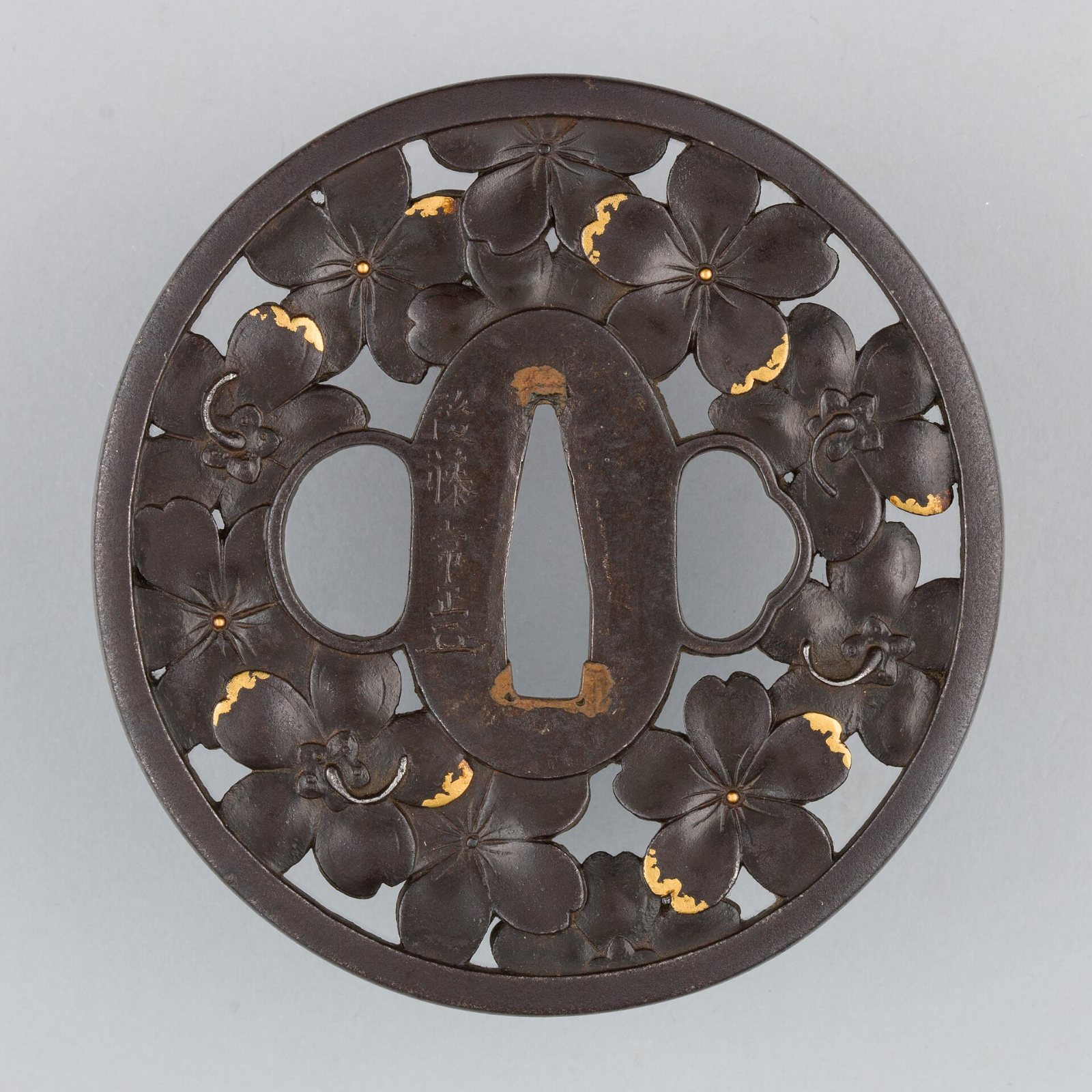
To find art in a weapon
The Sword
A Japanese blade is folded and forged from steel, then coated in clay before quenching so that the edge hardens differently from the spine. The result is the hamon, a pale wavy line that collectors read like a signature.
The tsuba, the guard between blade and grip, became a miniature sculpture: cherry blossoms, waves, dragons, and moons worked in iron, gold, and copper. In Indonesia and Malaysia, the kris with its wavy blade is recognized by UNESCO as a living heritage.
Sword guard (tsuba), Edo period, Japan. The Metropolitan Museum of Art.
Place
Seki and Bizen in Japan, Java, Bali
History
Japanese swordsmithing, Edo metalwork, Southeast Asian kris traditions
Artists
Japanese smiths and metalworkers, Javanese empu
Works to know
- Tsuba sword guardsEdo period metalworkers, 17th to 19th century, The Metropolitan Museum of Art
- The krisIndonesia and Malaysia, recognized by UNESCO, Southeast Asia
- Japanese swords and armorKamakura to Edo periods, 13th to 19th century, Tokyo National Museum
How to look
Look past the weapon to the surface: the grain of the steel, the line of the temper, the scene on the guard.
Group III
The Image
Screen, scroll, and the space left empty.
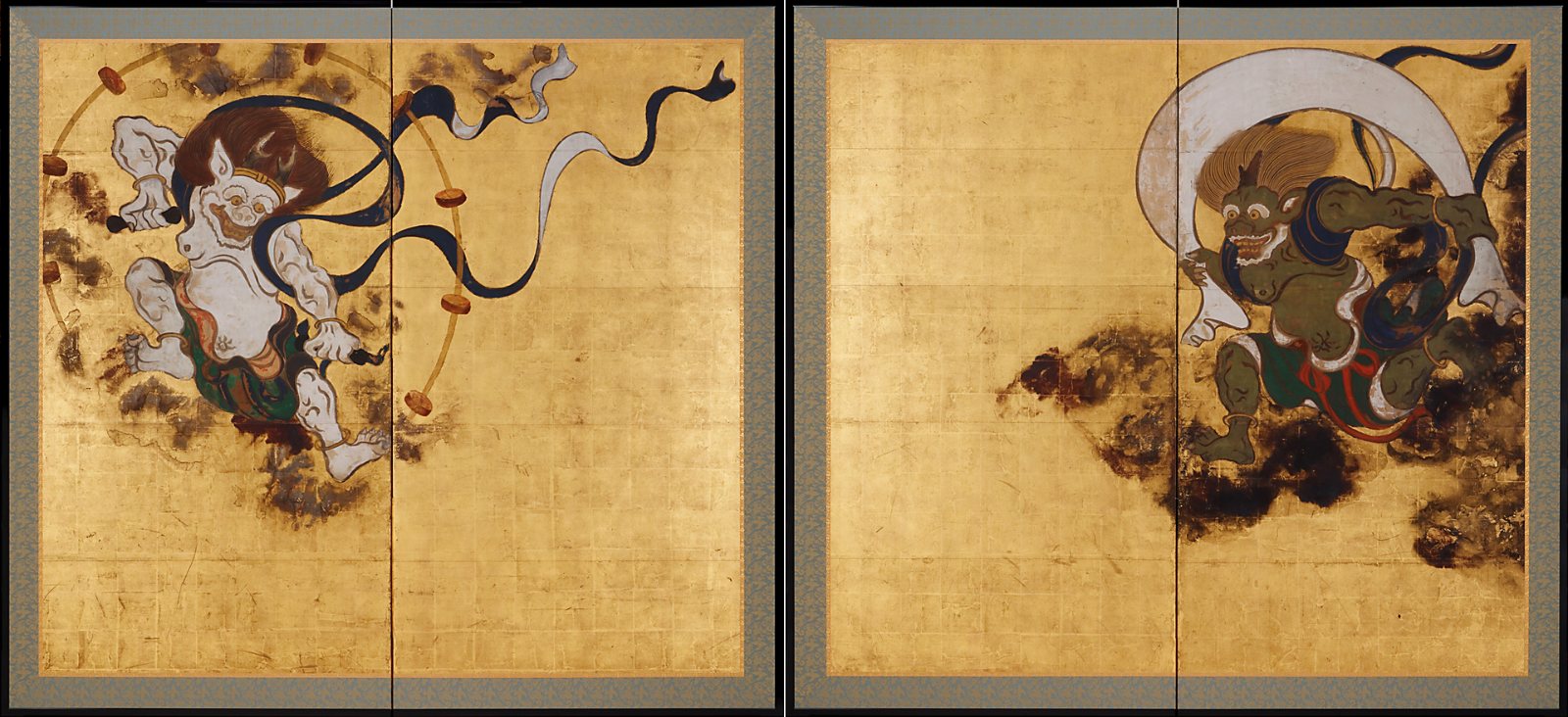
To be surrounded
The Screen
A folding screen is painting as architecture. It stands in a room, divides space, and glows. Gold leaf was not only luxury: in dim interiors lit by lamps, gold gathered light and threw it back.
Sōtatsu painted the gods of wind and thunder racing across an empty gold field. A century later Ogata Kōrin copied it, and Sakai Hōitsu copied Kōrin. Rinpa passed from artist to artist by homage, not by teacher and student.
Tawaraya Sōtatsu, Wind God and Thunder God, 17th century. Kennin-ji, Kyoto.
Place
Kyoto residences and temples, the Joseon throne hall
History
Momoyama gold screens, Rinpa, Joseon court screens
Artists
Tawaraya Sōtatsu, Ogata Kōrin, Kano Eitoku
Works to know
- Wind God and Thunder GodTawaraya Sōtatsu, 17th century, Kennin-ji, Kyoto
- IrisesOgata Kōrin, about 1701 to 1705, Nezu Museum, Tokyo
- Cypress TreesKano Eitoku, 1590, Tokyo National Museum
- Sun, Moon, and Five PeaksJoseon court painters, Joseon dynasty, Korea
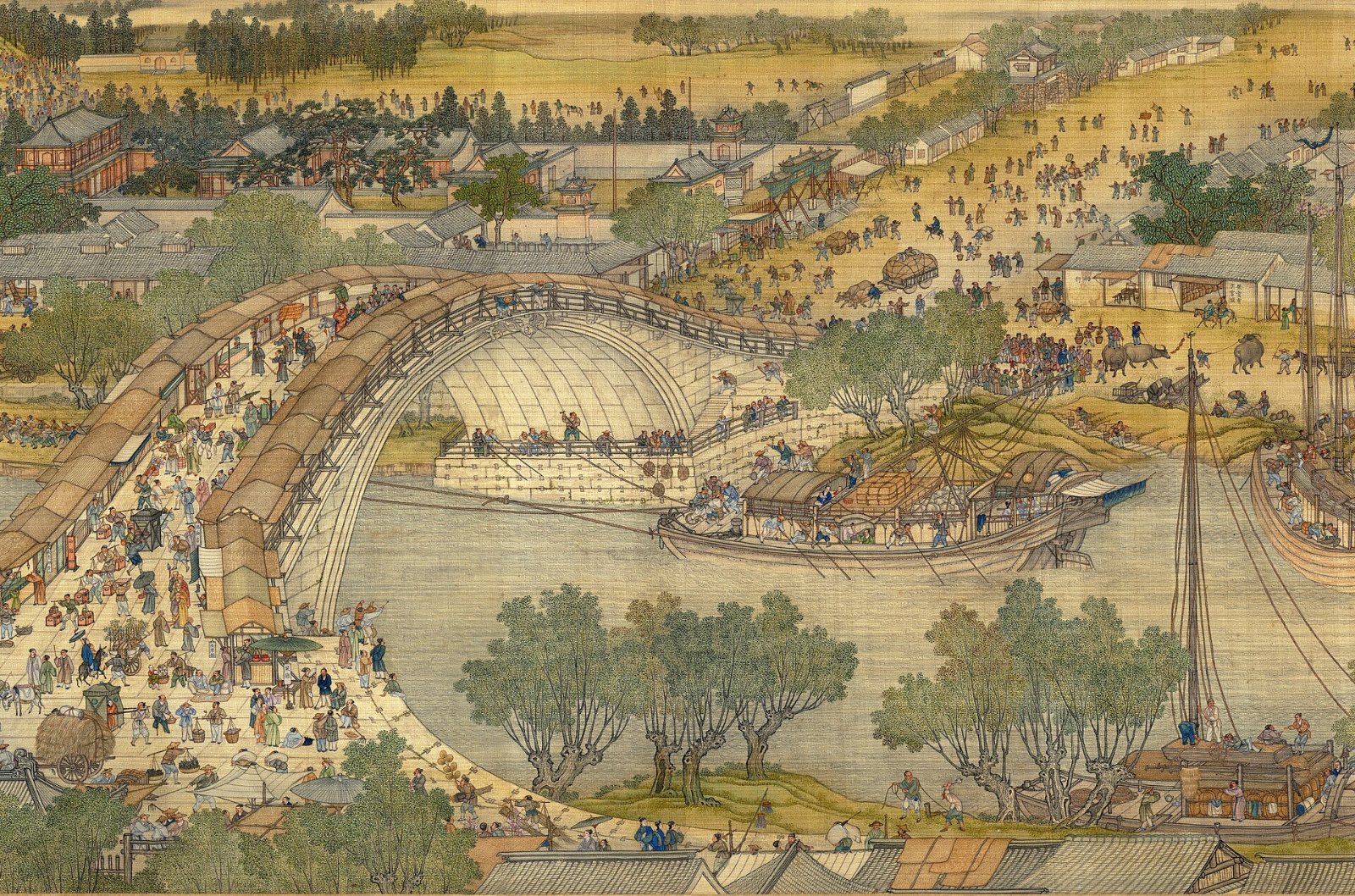
To travel through a painting
The Scroll
A handscroll is not a window. It is a journey. The viewer unrolls it an arm’s length at a time, right to left, so the painting unfolds like a walk or a story.
Zhang Zeduan followed a river into a Song city crowded with boats, bridges, and hundreds of people at work. In Japan, emakimono scrolls told The Tale of Genji and, in the Chōjū-giga, frogs and rabbits playing like people.
Zhang Zeduan, Along the River During the Qingming Festival, detail, 12th century. Palace Museum, Beijing.
Place
Kaifeng, the Heian court of Kyoto, Kōzan-ji temple
History
Song handscrolls, Heian and Kamakura emakimono
Artists
Zhang Zeduan, Wang Ximeng, Heian court painters
Works to know
- Along the River During the Qingming FestivalZhang Zeduan, 12th century, Palace Museum, Beijing
- A Thousand Li of Rivers and MountainsWang Ximeng, 1113, Palace Museum, Beijing
- The Tale of Genji scrollsHeian court painters, 12th century, Tokugawa Art Museum and Gotoh Museum
- Chōjū-giga (Frolicking Animals)unknown, 12th to 13th century, Kōzan-ji, Kyoto
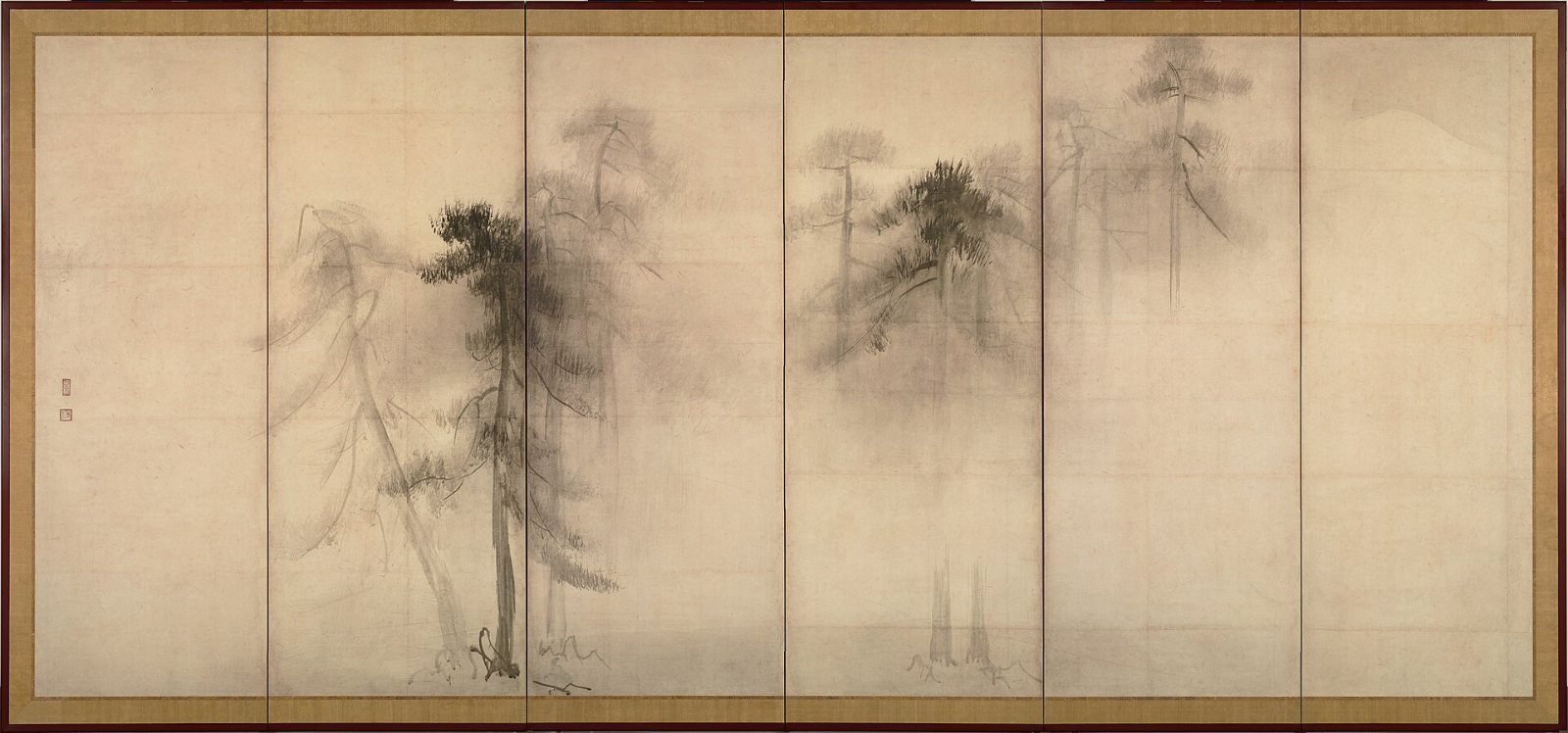
To see what is not painted
Emptiness
Much of Asian painting is made of what is left out. In Hasegawa Tōhaku’s Pine Trees, most of the paper is bare, and the trees dissolve into fog. The viewer’s eye supplies the mist.
Japanese has a word for this interval, ma. The Southern Song painter Ma Yuan pushed his compositions into one corner and left the rest open, earning the nickname One-Corner Ma.
Hasegawa Tōhaku, Pine Trees, late 16th century. Tokyo National Museum.
Place
Kyoto, Hangzhou, the Joseon literati studio
History
Southern Song court painting, Momoyama ink screens, Joseon literati ink
Artists
Hasegawa Tōhaku, Ma Yuan, Kim Jeong-hui
Works to know
- Pine TreesHasegawa Tōhaku, late 16th century, Tokyo National Museum
- Walking on a Mountain Path in SpringMa Yuan, early 13th century, National Palace Museum, Taipei
- Sehando (Winter Scene)Kim Jeong-hui, 1844, National Museum of Korea
How to look
Measure how much of the surface is untouched. Then ask what fills it.
Group IV
The Sacred
The figure and the temple.
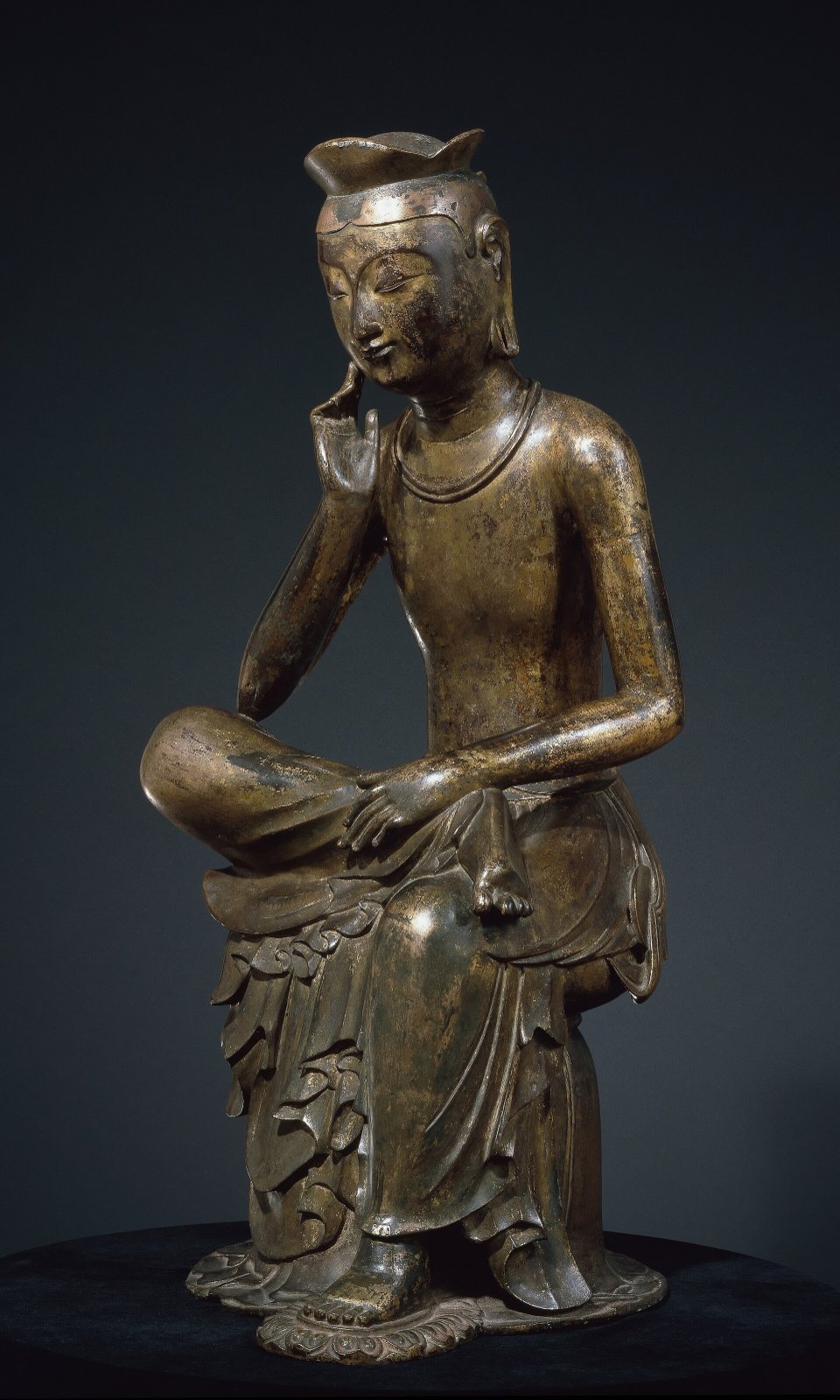
To encounter the human and divine
The Figure
A bodhisattva sits with one leg crossed, a finger raised to the cheek, and smiles as if at a thought no one else can hear. This Korean gilt bronze is among the most admired sculptures in Asia, and closely related figures survive in Japanese temples.
Buddhist sculpture travelled with the faith: to the Ashura of Kōfuku-ji in Nara, to the walking Buddhas of Sukhothai in Thailand, to the calm faces of Borobudur in Java. Across all of them, gesture speaks before any name.
Pensive Bodhisattva, gilt bronze, early 7th century. National Museum of Korea, National Treasure.
Place
Gyeongju, Nara, Sukhothai, Central Java
History
Three Kingdoms Korea, Nara Japan, Sukhothai Thailand, Sailendra Java
Artists
Unnamed bronze casters and carvers, the sculptor Jōchō
Works to know
- Pensive BodhisattvaThree Kingdoms Korea, early 7th century, National Museum of Korea
- AshuraKōfuku-ji, 734, Nara
- Walking BuddhaSukhothai, 14th century, Thailand
- Amida BuddhaJōchō, 1053, Byōdō-in, Uji
How to look
Look at the hands first. A raised palm, a touch to the earth, a finger at the cheek each mean something.
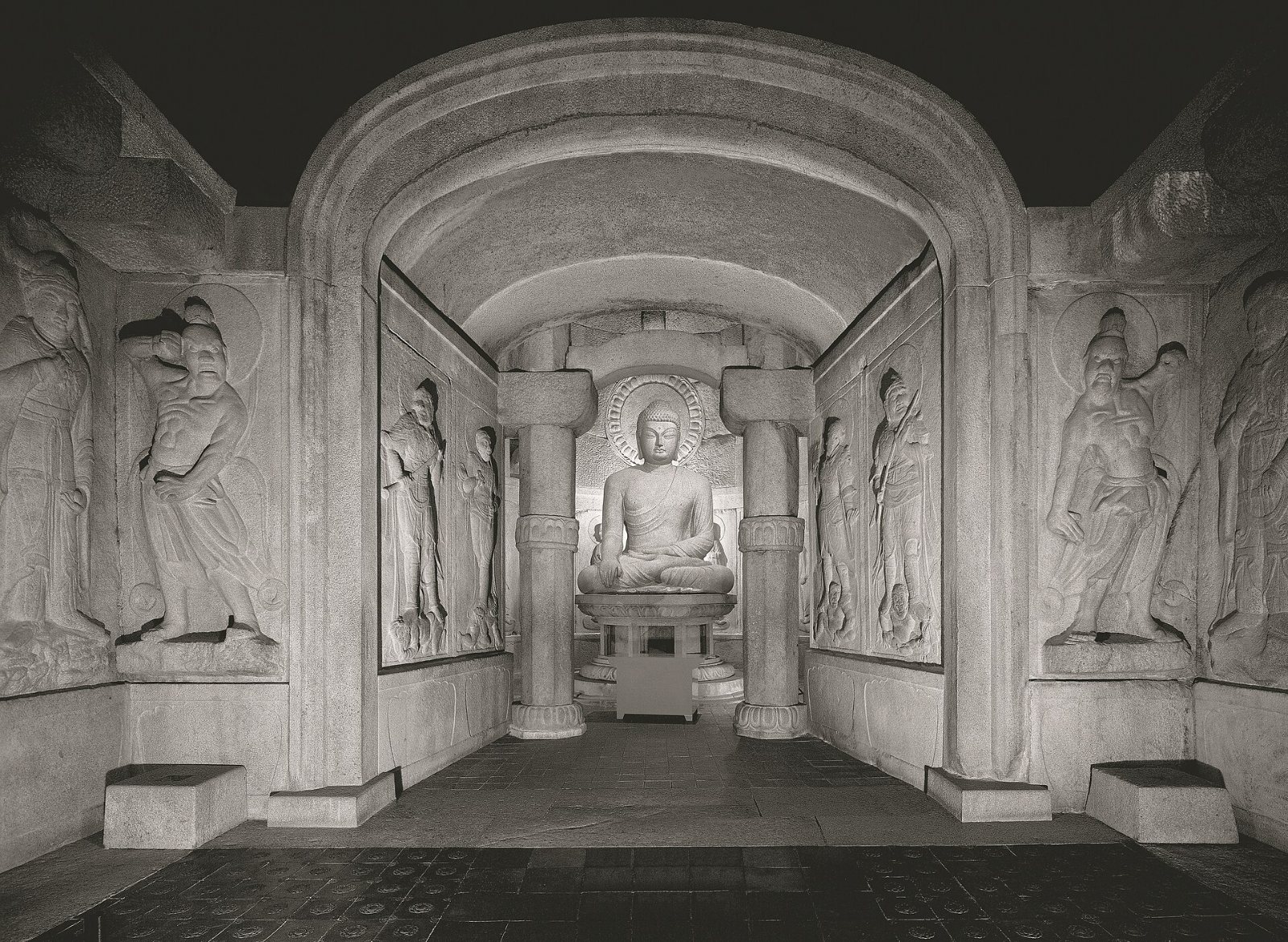
To enter sacred space
The Temple
A temple is a total work of art. Architecture, sculpture, painting, and ritual were designed together, and the visitor’s walk through gates and halls was part of the design.
At Seokguram in Korea, a granite Buddha sits in an artificial grotto, surrounded by carved guardians. At Borobudur, pilgrims circle upward past thousands of relief panels. At the Phoenix Hall of Byōdō-in, a gilded Amida waits across a pond.
Seokguram Grotto, Gyeongju, 8th century.
Place
Gyeongju, Central Java, Uji, Angkor, Dunhuang
History
Unified Silla, Sailendra Java, Heian Japan, Khmer Angkor, the Mogao Caves
Artists
Silla stone carvers, Jōchō, Khmer relief sculptors
Works to know
- Seokguram GrottoUnified Silla, 8th century, Gyeongju, UNESCO World Heritage
- BorobudurSailendra dynasty, 9th century, Central Java, UNESCO World Heritage
- Phoenix Hall, Byōdō-inHeian period, 1053, Uji, Kyoto
- Angkor Wat reliefsKhmer Empire, 12th century, Cambodia
How to look
Imagine the approach. What do you see first, and what is kept until the end?
Group V
The World
Court, street, and island.
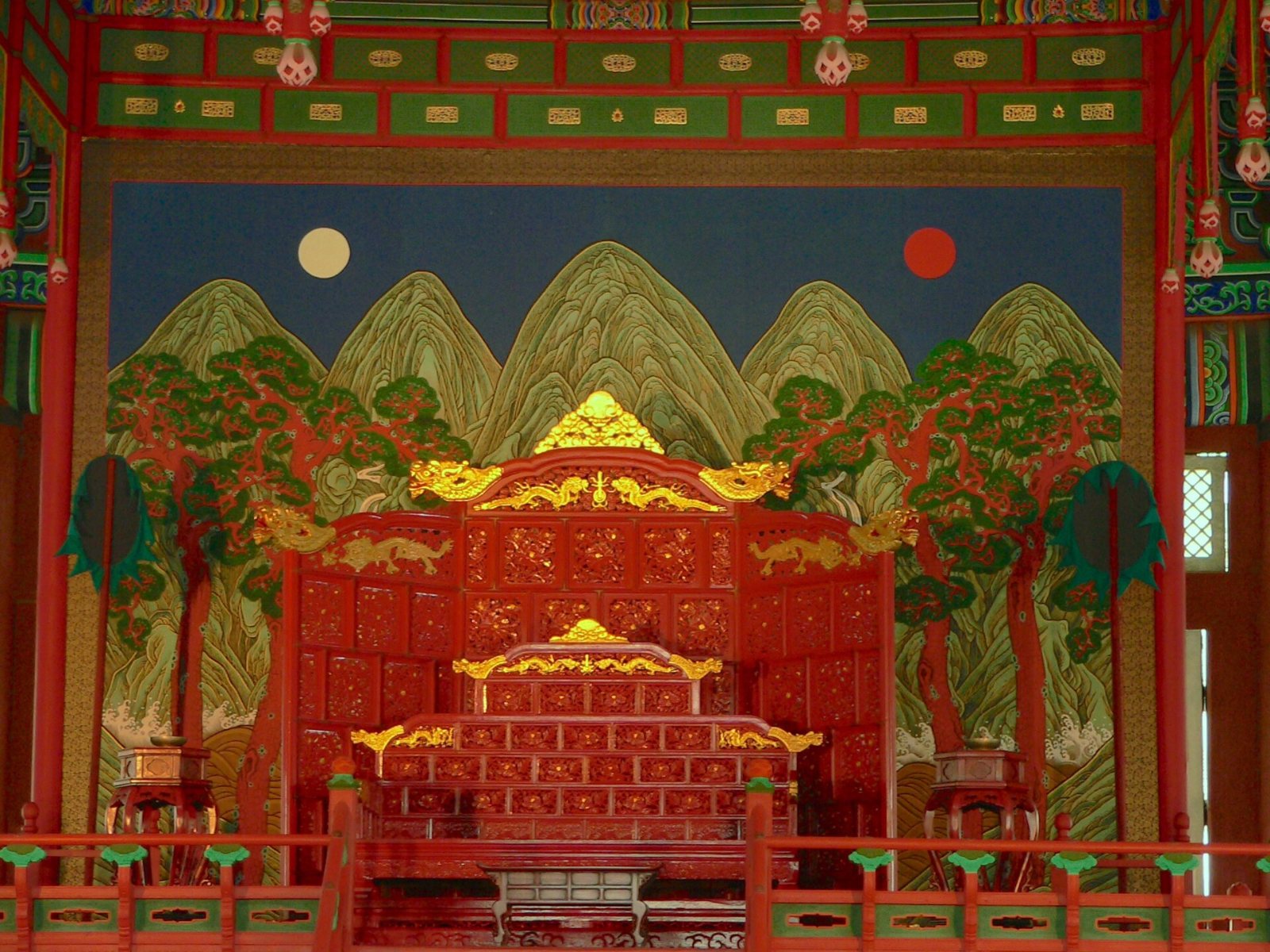
To see power and ceremony
The Court
Behind every Joseon king stood a screen of the sun, the moon, and five mountain peaks, a painted cosmos that made the ruler its center. Court painters of the royal painting bureau also recorded ceremonies in the uigwe, illustrated protocol books now listed in UNESCO’s Memory of the World.
In China, Emperor Huizong of Song was himself a painter and calligrapher. In Heian Japan, court life produced The Tale of Genji and the scrolls that illustrated it.
Throne hall of Gyeongbokgung Palace, Seoul, with the Sun, Moon, and Five Peaks screen.
Place
Seoul, Kaifeng, Kyoto
History
Song imperial academy, Heian court culture, Joseon court painting
Artists
Emperor Huizong, Joseon court painters, Heian court painters
Works to know
- Sun, Moon, and Five Peaks screenJoseon court painters, Joseon dynasty, Korea
- Royal protocol books (uigwe)Joseon court, 17th to 19th century, Korea, UNESCO Memory of the World
- Auspicious CranesEmperor Huizong, 1112, Liaoning Provincial Museum
To encounter living culture
The Street
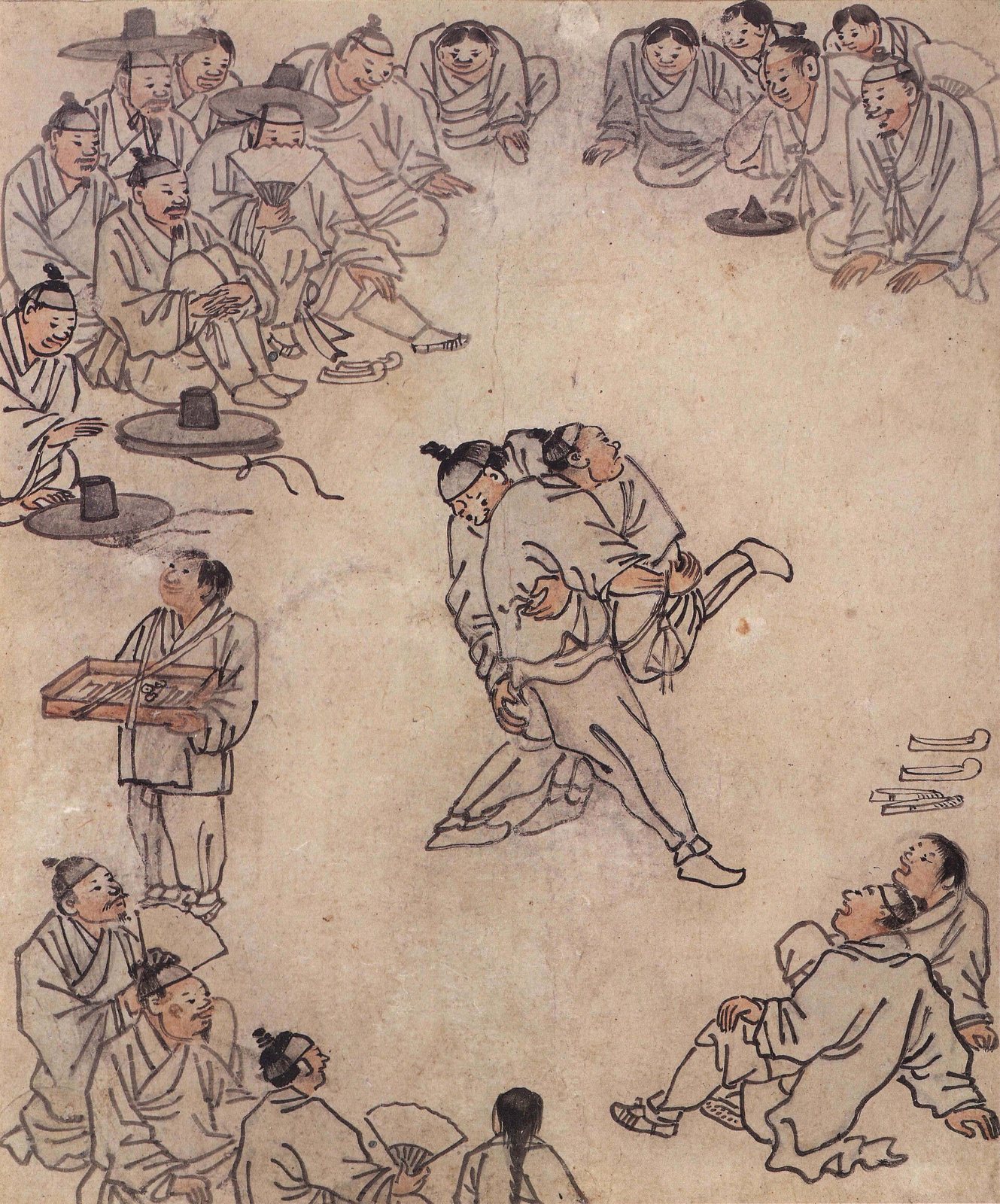
In the 18th century, Korean painters turned from ideal landscapes to the people around them. Kim Hong-do painted wrestlers, blacksmiths, and schoolboys with warmth and humor. Shin Yun-bok painted the stylish and the romantic.
In Edo Japan, ukiyo-e, pictures of the floating world, captured actors, beauties, and crowded bridges. Centuries earlier, Zhang Zeduan filled a Song scroll with a city at work.
Kim Hong-do, Ssireum (Wrestling), from an album of genre paintings, 18th century. National Museum of Korea.
Place
Hanyang (Seoul), Edo, Kaifeng
History
Joseon genre painting, Edo ukiyo-e, Song city scrolls
Artists
Kim Hong-do, Shin Yun-bok, Kitagawa Utamaro, Utagawa Hiroshige
Works to know
- Album of Genre PaintingsKim Hong-do, 18th century, National Museum of Korea
- Hyewon Album of Genre PaintingsShin Yun-bok, early 19th century, Kansong Art Museum, Seoul
- Beauties and daily life printsKitagawa Utamaro, 1790s, Japan
How to look
Find the person no one else in the picture is watching.
To look outward
The Island
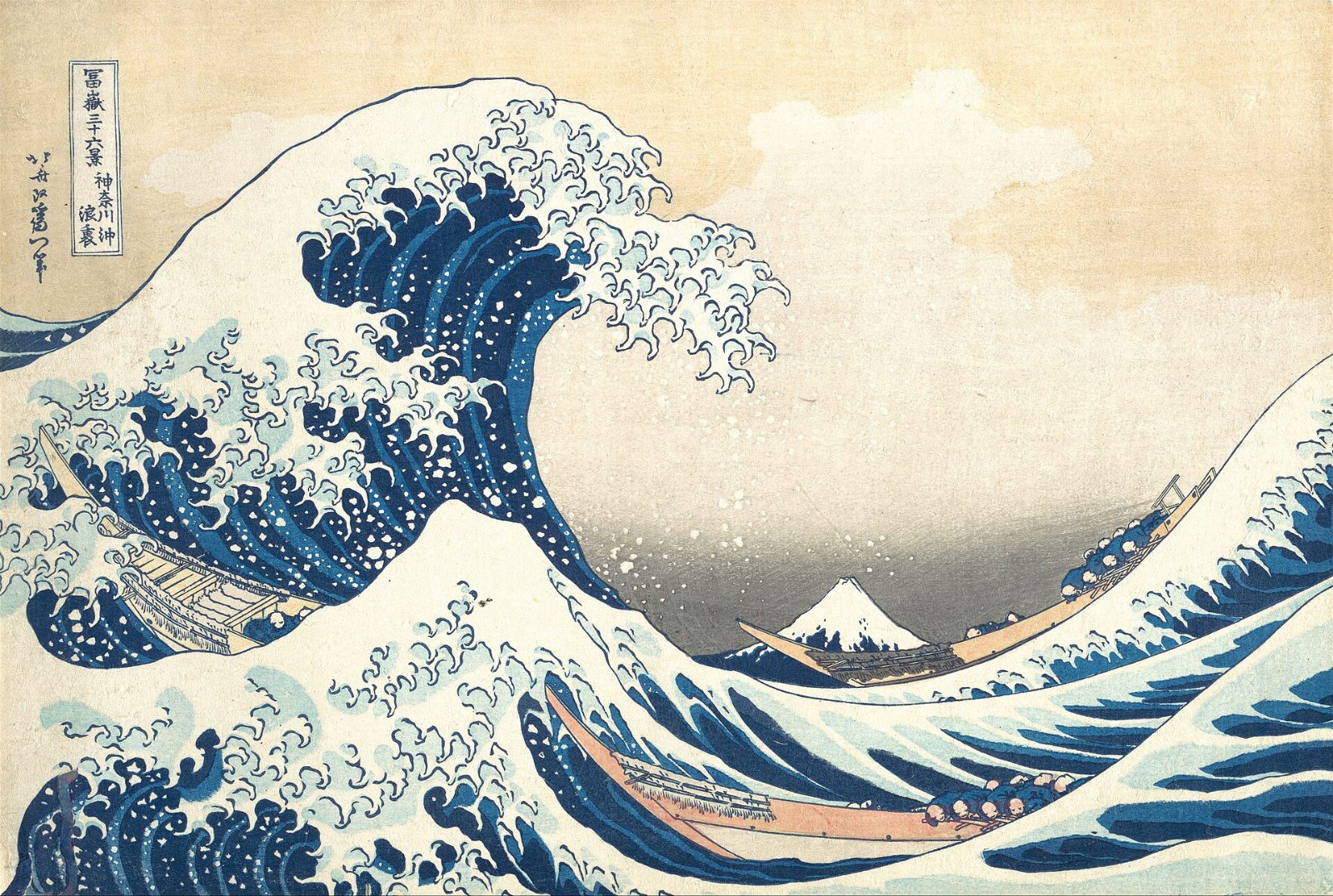
Japan, the Philippines, Indonesia, and Taiwan are worlds of islands, and their artists looked out to sea. Hokusai printed his wave in Prussian blue, a pigment newly arriving by ship, and sent it around the world.
In the Philippines, Fernando Amorsolo painted the light of the countryside and shore. Juan Luna won a gold medal in Madrid in 1884 with Spoliarium. In Java, Raden Saleh became the first modern Indonesian painter known in Europe.
Katsushika Hokusai, Under the Wave off Kanagawa, about 1831.
Place
Edo, Manila, Java, Taiwan
History
Edo woodblock prints, Philippine academic painting, 19th century Indonesian painting
Artists
Katsushika Hokusai, Juan Luna, Fernando Amorsolo, Raden Saleh
Works to know
- Under the Wave off KanagawaKatsushika Hokusai, about 1831, Japan
- SpoliariumJuan Luna, 1884, National Museum of Fine Arts, Manila
- Rice planting and shore scenesFernando Amorsolo, 20th century, Philippines
- The Arrest of Pangeran DiponegoroRaden Saleh, 1857, Indonesia
How to look
Where is the horizon, and who is on the far side of it?
Images of public-domain and openly licensed works via Wikimedia Commons. Authors, licenses, and source pages are listed in our image credits. Collections named are where each work is held.
Return to the work
Orchids remain on every path. Keep walking through the Collective, or write to us.