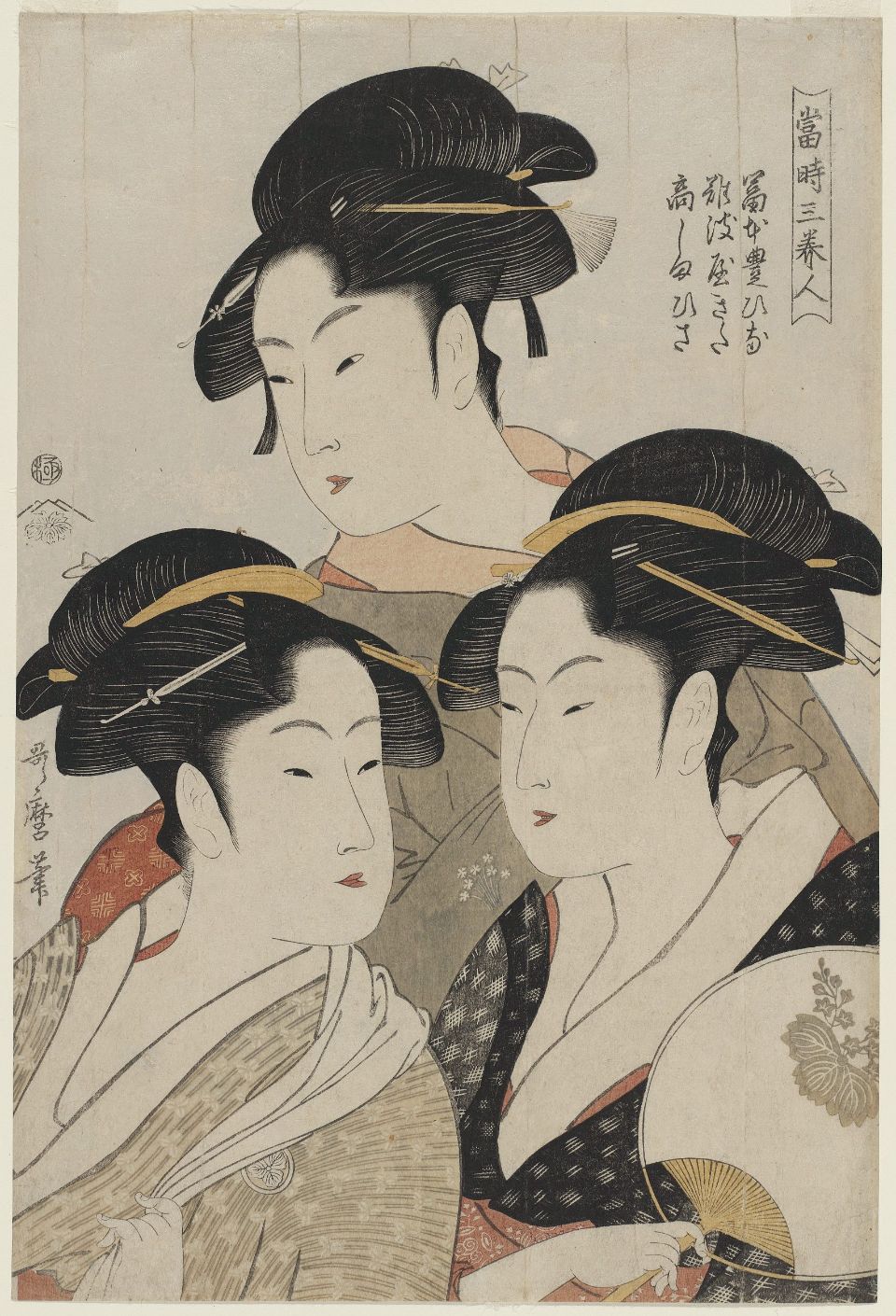
Kitagawa Utamaro made the physiognomy of Edo women a print specialty: elongated faces, insect-like delicacy, and psychological close-ups that defined bijinga for later generations. He also illustrated nature books and paid a legal price for politically sensitive warrior prints.
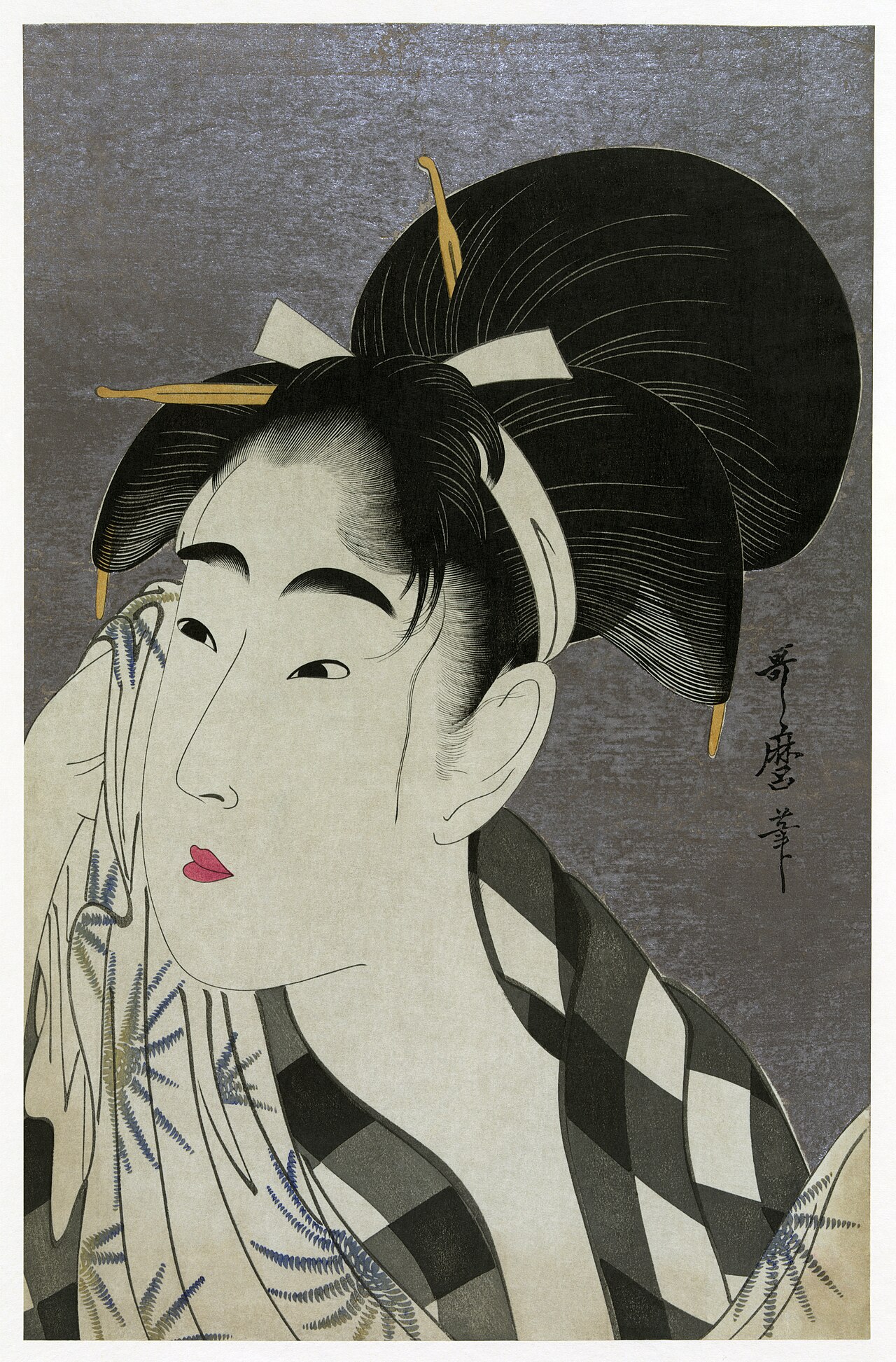
Look at the face of the work and the hand behind it. Scroll for life, lineage, and where American audiences met this name.
Life and work
Dates: c. 1753-1806. Place: Edo (Tokyo), Japan. Medium: Ukiyo-e; bijinga (pictures of beauties), illustrated books.
Birth year is approximate (often c. 1753). Utamaro worked in Edo under publishers such as Tsutaya Juzaburo and became the leading beauty-print designer of the 1790s. In 1804 he was punished (manacled) for prints depicting Toyotomi Hideyoshi that violated shogunal restrictions. He died in 1806. Workshop pupils continued related styles. Utamaro's closeness to publisher Tsutaya Juzaburo placed him at the commercial and intellectual center of Edo print culture. Beauty prints sold desire and fashion news; they also recorded hairstyles and textile patterns with almost ethnographic care. Utamaro's women are types and individuals at once: a known courtesan's name may appear, yet the print still sells an ideal of elongated grace. His insect and shell books show a naturalist's patience that complicates any claim he only trafficked in pleasure-quarter fantasy. Punishment in 1804 reminds readers that print culture lived under state surveillance.
Signature works
Famous series include collections of famous beauties, physiognomic studies, and sheets of known courtesans from Yoshiwara. Illustrated books on insects and shells show another side of his observation. Major impressions live in museums in Japan, Europe, and the United States.
Who they inspired
Later bijinga designers worked in his wake. European modernists prized Utamaro's line and crop; Mary Cassatt's drypoints and maternal themes converse with Japanese print close-ups she studied. Graphic designers still quote the large-head bust format. Fashion illustrators and comic artists still study his line economy. Impressionist and Post-Impressionist painters who never visited Japan met Edo women first through Utamaro sheets in Paris shops.
American / US crossover
US museums (Met, Boston MFA, Freer, and others) hold important Utamaro prints acquired during Japonisme collecting. American artists of the late nineteenth century encountered him through Paris and Boston networks. No US biography is claimed for Utamaro himself. American Japonisme collectors prized Utamaro bust portraits; Boston and New York holdings remain teaching staples. Cassatt's engagement with Japanese prints is a documented US-adjacent artistic dialogue even though she worked mainly in France. Utamaro anchors the bijinga side of Edo print culture while Hokusai and Hiroshige anchor landscape. Together they show how publishers segmented desire, travel, and fame. American museum drawers full of his bust portraits prove Japonisme collecting was dense and lasting.
Era door: Cities, prints, faiths