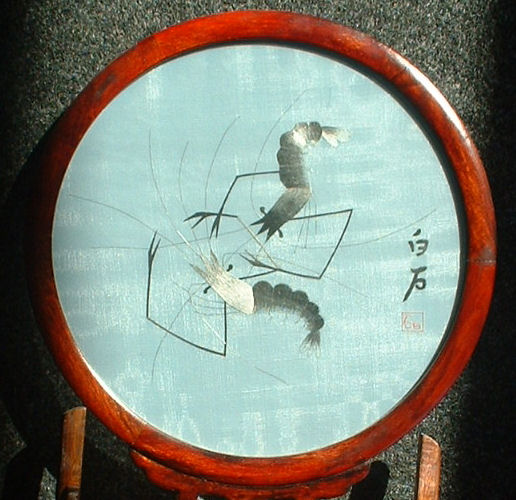
Qi Baishi brought vernacular subjects (shrimp, crabs, chicks, vegetables, insects) into a bold modern ink idiom that ordinary viewers could love without abandoning brush tradition. He became one of the most celebrated Chinese painters of the twentieth century.
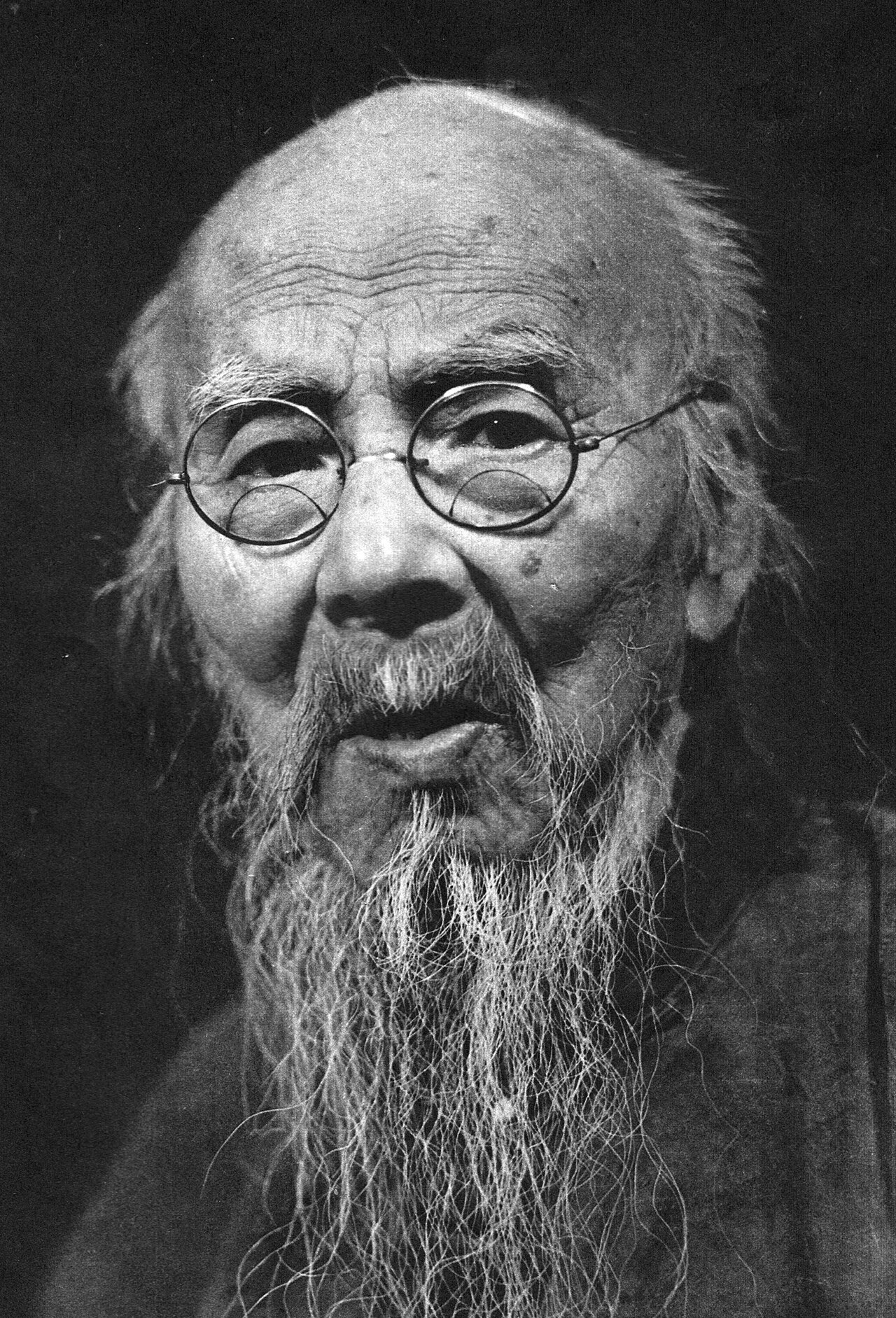
Look at the face of the work and the hand behind it. Scroll for life, lineage, and where American audiences met this name.
Life and work
Dates: 1864-1957. Place: Hunan origin; major career in Beijing. Medium: Ink and color on paper: flowers, birds, shrimp, insects, figures.
Born into a farming family in Xiangtan, Hunan, in 1864, Qi trained first as a carpenter and seal carver before becoming a professional painter. He settled in Beijing in the 1910s-1920s and built a career through teaching, selling paintings, and refining a late style of simple forms and strong color. He lived through late Qing, Republican, and early People's Republic periods, and died in Beijing in 1957. Political honors in his final years are part of the public record; this page does not invent exhibitions or ownership claims for Orchid Way. Qi's late style looks simple and is not: years of seal carving, poetry, and careful looking sit behind a shrimp that seems dashed off. He sold widely, which sometimes made critics sniff, yet that popularity is part of why he matters as a modern public painter. Qi's inscriptions often joke or bless, tying picture to voice. He painted the creatures of markets and ponds, not only the scholar's preferred orchid and bamboo, though he could paint those too. Longevity and late productivity mean his hand appears across thousands of works, so connoisseurship focuses on quality bands rather than a tiny closed oeuvre.
Signature works
Widely known subjects include ink shrimp, crabs, frogs, chicks, peonies, and morning glories, often with playful inscriptions. Countless works survive in Chinese museums and private collections; individual titles vary by catalog. Public fame rests on the recognizable subject set and late brush manner rather than a single Western-canonical canvas.
Who they inspired
Qi shaped modern Chinese bird-and-flower painting and inspired generations of ink painters who sought freshness without pure Western oil realism. His market success also modeled a modern professional path for brush artists. Print and poster culture spread his motifs across the Chinese-speaking world. Students copied his chicks and crabs as exercises in life and humor. Contemporary ink artists who want vernacular subjects without academic oil still start from Qi's permission slip.
American / US crossover
US museums and Chinese-American communities know Qi through exhibitions, auctions, and diaspora collecting. He is not primarily an American artist, but twentieth-century global Chinese art circuits brought his work into American institutional view. Documented US crossover is reception and collecting, not a long US residency. Auction visibility in New York and Hong Kong, plus exhibitions in US museums, gave Qi a diaspora and collector public. Chinese-language schools in America also hang reproductions as cultural literacy, a soft but real fan base.
Era door: After the nation