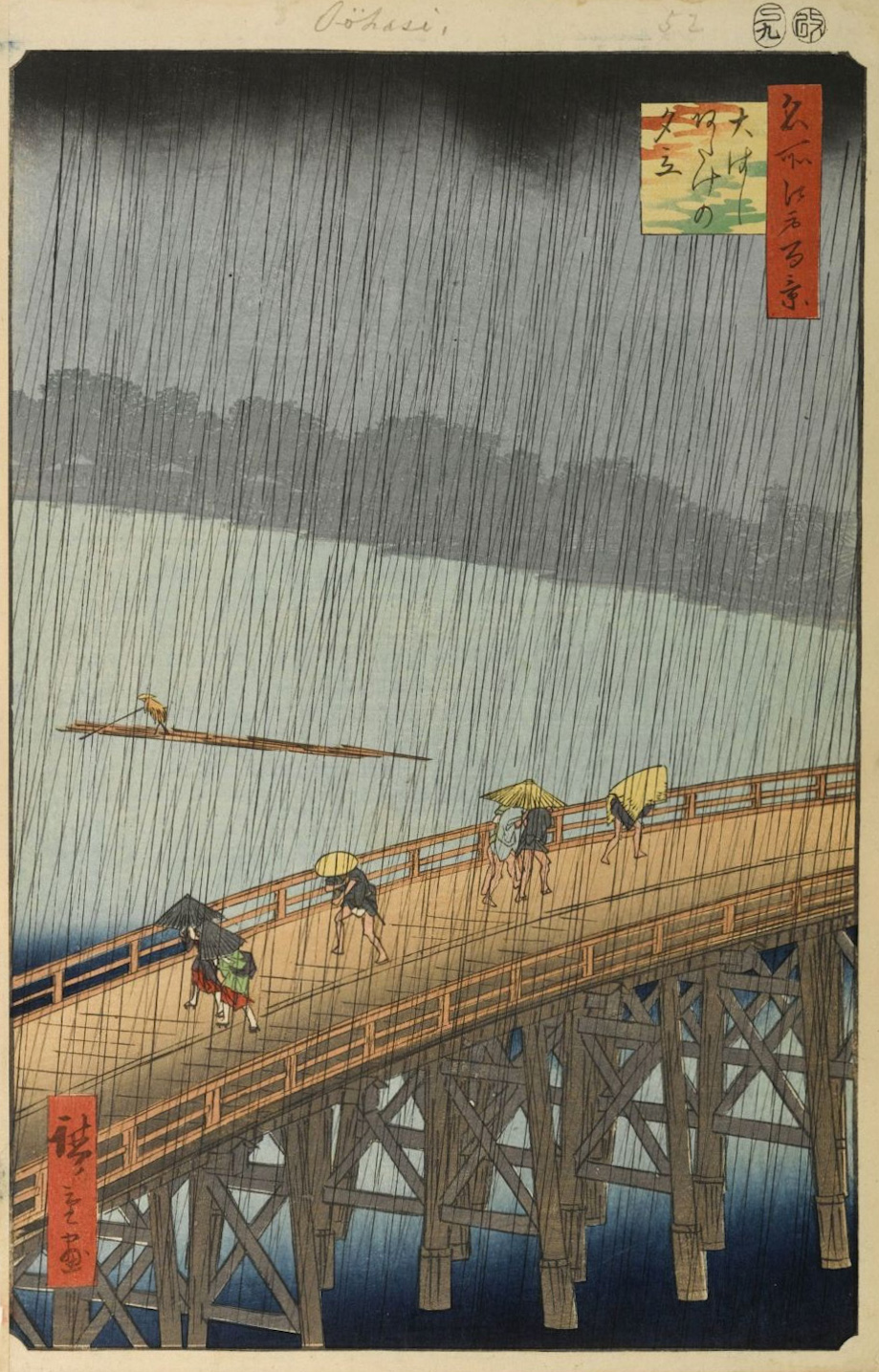
Utagawa Hiroshige made weather into a printable subject. His Tokaido road series and later One Hundred Famous Views of Edo taught viewers to read rain, snow, dusk, and distance as the true drama of landscape prints. Where Hokusai often monumentalized Fuji, Hiroshige softened the city and the highway into poetic travel.
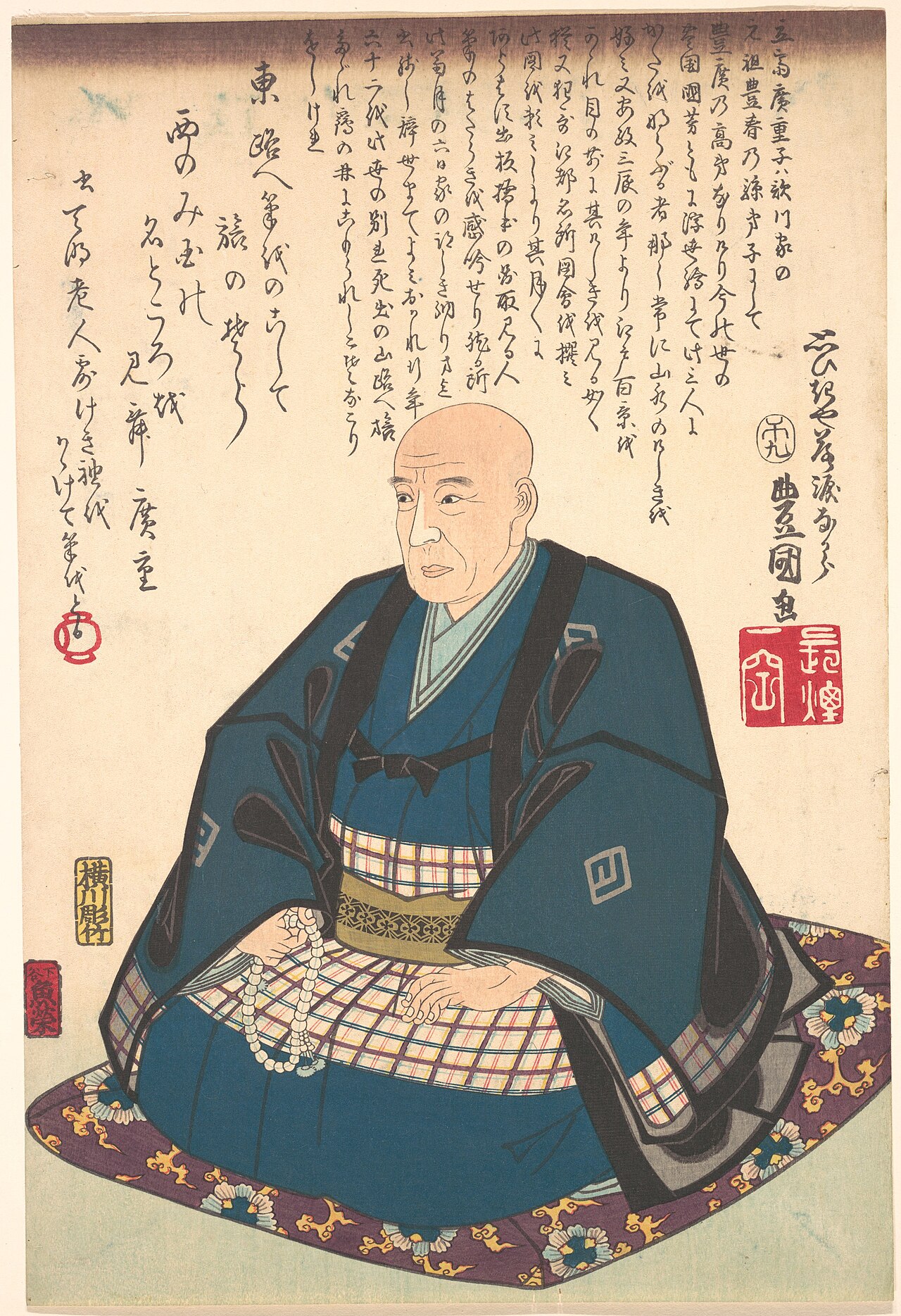
Look at the face of the work and the hand behind it. Scroll for life, lineage, and where American audiences met this name.
Life and work
Dates: 1797-1858. Place: Edo (Tokyo), Japan. Medium: Ukiyo-e woodblock landscape and bird-and-flower prints.
Born Ando Tokutaro in 1797 in Edo, Hiroshige entered the Utagawa school and took the name Hiroshige. He worked as a fire warden in his youth and then as a full professional print designer. The Fifty-three Stations of the Tokaido (Hoeido edition, early 1830s) made his reputation. He continued with other road and famous-place series, bird-and-flower sheets, and collaborative projects. He took Buddhist vows late in life and died in Edo in 1858, shortly before the Meiji rupture remade the print world. Hiroshige's output was enormous because the Edo print market rewarded series: travelers wanted stations they knew, and publishers wanted reliable sellers. He balanced topographical cues with poetic exaggeration, so a bridge in rain could feel more true than a measured map. Late vertical sheets of Edo neighborhoods show how the city itself became a famous-place album, not only the highway west.
Signature works
Signature public series include The Fifty-three Stations of the Tokaido, Famous Places of the Eastern Capital, and One Hundred Famous Views of Edo (many sheets completed or published with help from Hiroshige II after his death). Individual sheets such as Sudden Shower over Shin-Ohashi Bridge and Atake and Plum Estate, Kameido are among the most reproduced Japanese prints in Western museums.
Who they inspired
Hiroshige shaped later ukiyo-e landscape designers and the shin-hanga revival's mood of weather and place. In Europe, van Gogh famously copied two Hiroshige compositions in oil (Bridge in the Rain and Flowering Plum Tree). Whistler's nocturnes and Japoniste staging of atmosphere sit in the same reception history. Travel poster and photography traditions later echoed his station-by-station storytelling. Designers of railway posters, hotel brochures, and later anime backgrounds inherited his habit of staging weather as character. Conservators and print historians still use his editions to teach how color blocks wear and how publishers refreshed popular designs.
American / US crossover
US museum collections (Boston MFA, Met, Freer/Sackler, and many university museums) hold extensive Hiroshige prints acquired during and after the Japonisme boom. American audiences met his work through exhibitions, gift-shop reproductions, and art-history surveys rather than through a US career. The crossover is documentary and institutional, not biographical invention. University slide libraries in the United States made Hiroshige a standard comparison beside Turner and Whistler for atmosphere studies. That classroom fame is reception history, not a claim that he painted for American patrons in his lifetime.
Era door: Cities, prints, faiths