Ports and capitals press ink. Popular devotion, pleasure quarters, and road culture share streets with elite painting.
Cities, prints, faiths gathers the early modern urban explosion: woodblock print economies in Japan, genre painting in Joseon, late imperial Chinese painting markets, and intensifying global trade pressures.
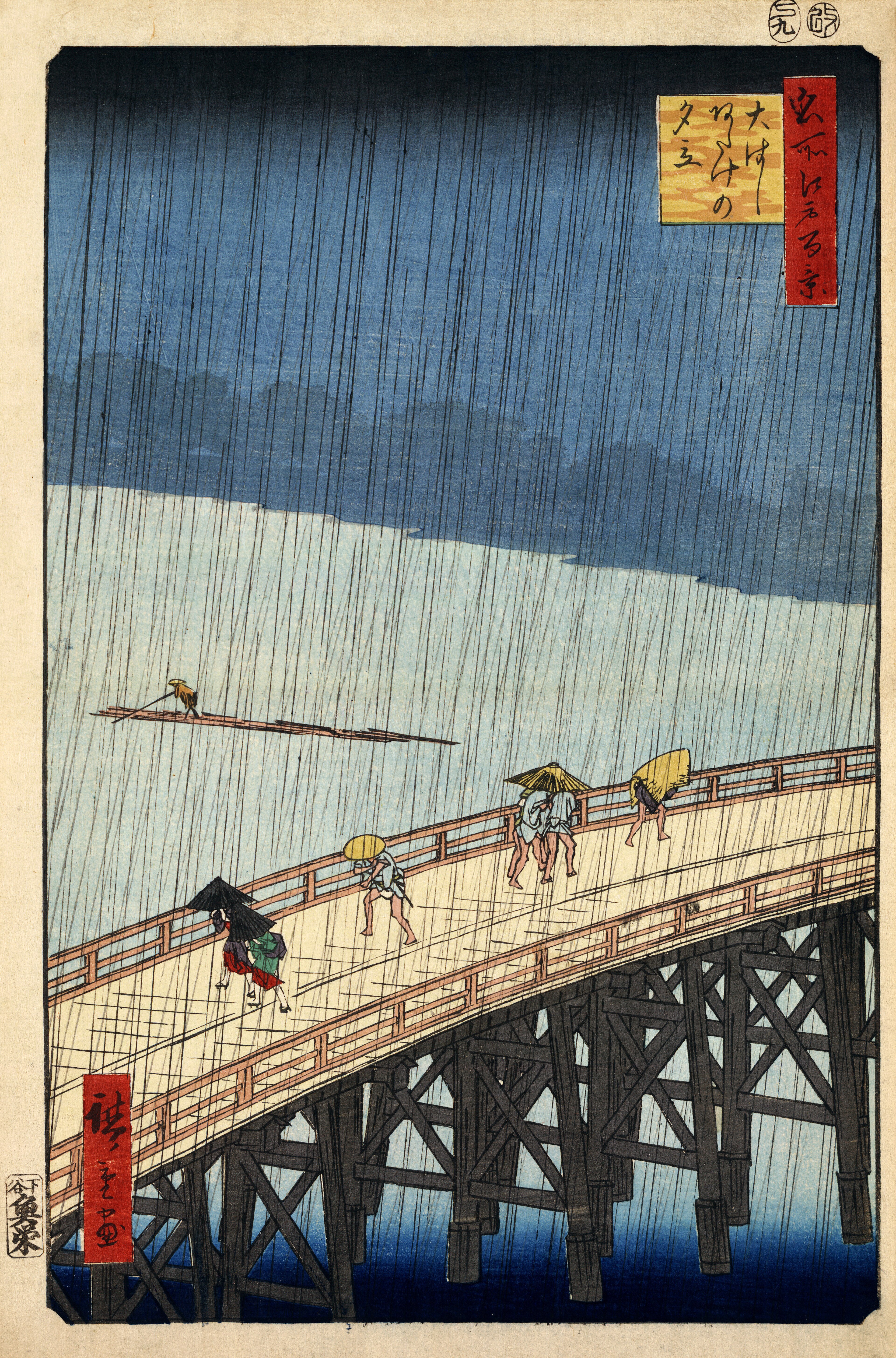
Ukiyo-e made actors, beauties, landscapes, and satire available to townspeople. Hokusai, Hiroshige, and Utamaro are roster guides into that world. Publishers, carvers, and printers shared authorship even when one designer's name headlines the sheet.
Ogata Korin's Rimpa revival shows how Kyoto design culture could be courtly and commercial at once: screens, lacquers, and textile thinking.
Jeong Seon's jingyeong landscapes and the genre albums of Kim Hong-do and Shin Yun-bok show Korean painters claiming local place and social life as worthy subjects.
Temples, festivals, Christian missions in some regions, and popular pilgrimage all shape visual culture. The Collective names plurality without collapsing it into a single slogan.
Industrial empires, unequal treaties, and new art schools crack older mirrors. The cracked mirror is next.