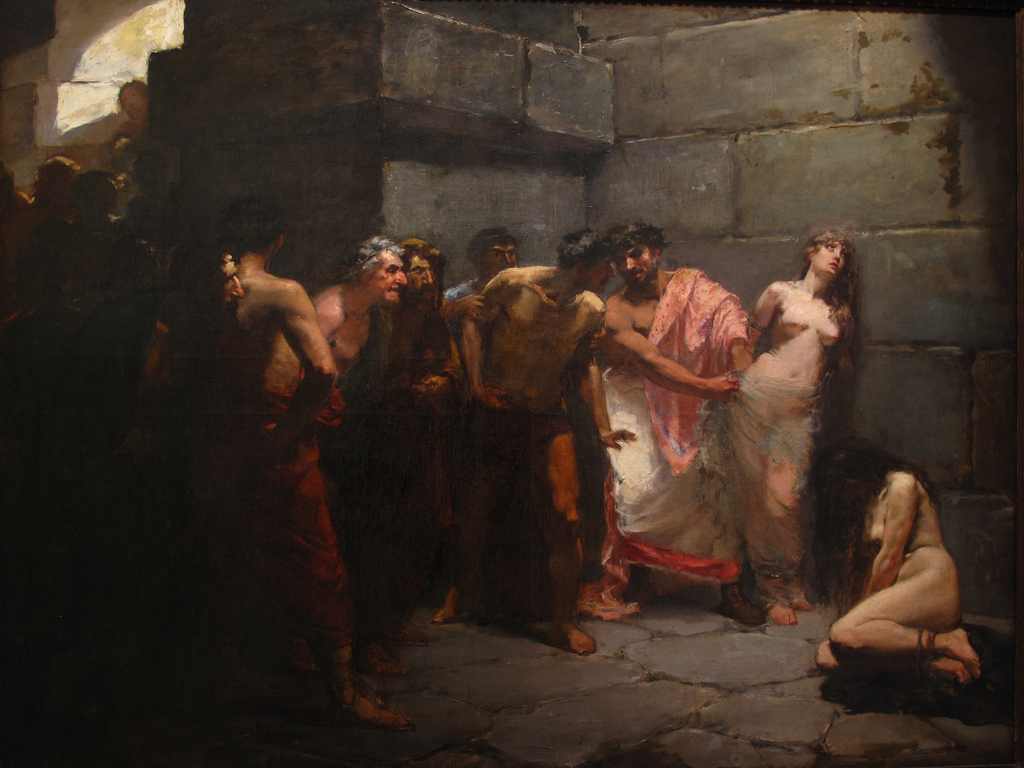
Felix Resurreccion Hidalgo shared the 1884 Madrid triumph with Juan Luna, winning a silver medal for Las virgenes cristianas expuestas al populacho. Quieter in myth than Luna, he remains a pillar of nineteenth-century Filipino painting in Europe.
Life and work
Dates: 1855-1913. Place: Binondo, Manila; long career in Europe; died in Spain. Medium: Oil painting; academic and symbolist-leaning subjects.
Born in 1855 in Binondo, Manila, Hidalgo studied in Manila and then in Spain. He lived much of his professional life in Europe, painting historical, religious, and allegorical subjects. He stayed connected to Filipino reformist circles abroad. He died in 1913 in Spain. Philippine institutions later secured major works for national collections. Hidalgo's quieter public myth beside Luna sometimes hid equal salon ambition. Living long in Europe kept him inside continental stylistic shifts, including moodier, symbolist-leaning light in some later works. Hidalgo's medal in 1884 arrived in the same season as Luna's gold, locking the two painters into a twin narrative Philippine schools still recite. His European decades mean stylistic weather from Spanish and French circles entered Filipino academic painting through his example. Death in Spain closes a life lived largely away from Manila yet claimed by Manila's museums.
Signature works
Las virgenes cristianas expuestas al populacho and other academic canvases (including landscapes and portraits) form the public record. The National Museum of Fine Arts in Manila anchors the teaching display of the 1884 generation.
Who they inspired
Hidalgo and Luna together inspired Filipino artists to measure themselves against European salons. Art schools in the Philippines teach the pair as proof of colonial-era mastery. Later painters inherit both the academic skill model and the nationalist framing. Philippine museums teach Hidalgo as proof that the 1884 triumph was a generation, not a single hero. Art students copy his figural groupings when learning academic composition.
American / US crossover
US crossover parallels Luna's: Philippine-American history, Filipino-American museums and community shows, and academic interest in Propagandist-era culture. Hidalgo did not build a primary US career; American audiences meet him through Philippine cultural diplomacy and diaspora education. Filipino-American heritage months and university galleries occasionally hang Hidalgo reproductions beside Luna. US colonial archives that document Philippine education also explain why both painters entered American-era schoolrooms as national exemplars. The Collective places Hidalgo in The cracked mirror beside Luna so visitors see a generation answering empire with salon skill. His canvases remain teaching instruments for composition, anatomy, and the politics of medals. We invent no US ownership; we note diaspora education as the American path into his name.
Era door: The cracked mirror