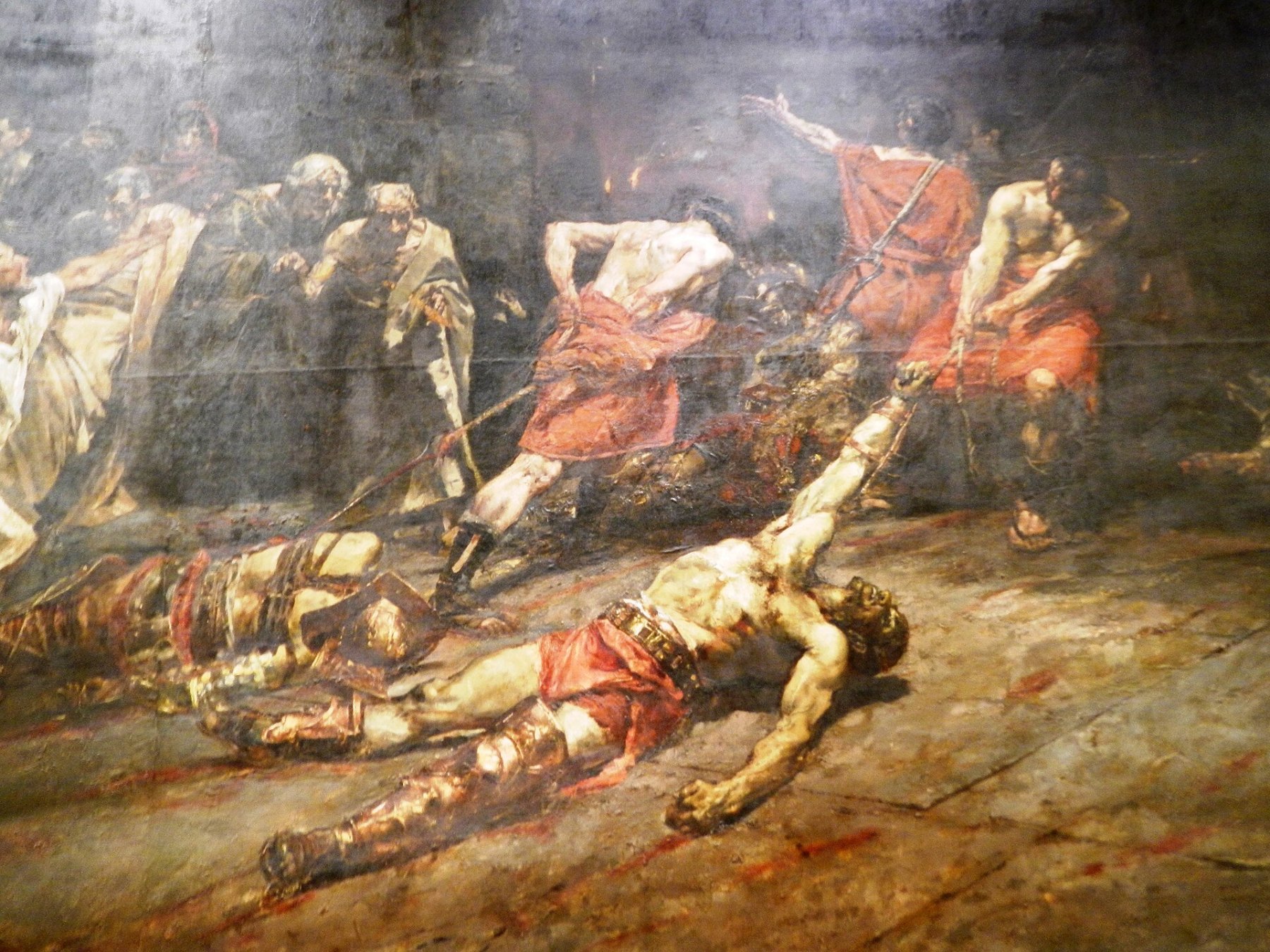
Juan Luna's Spoliarium won a gold medal at the 1884 Madrid Exposition of Fine Arts and became a symbol of Filipino artistic mastery under Spanish colonial rule. Painter and Propagandist-era figure, Luna worked in the European academic language while his generation argued for reform.
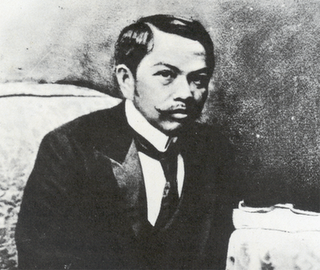
Look at the face of the work and the hand behind it. Scroll for life, lineage, and where American audiences met this name.
Life and work
Dates: 1857-1899. Place: Badoc, Ilocos Norte; trained in Manila and Europe; died in Hong Kong. Medium: Oil painting; academic history painting.
Born in 1857 in Badoc, Ilocos Norte, Luna studied at the Ateneo and the Academia de Dibujo y Pintura in Manila, then in Madrid and Rome. He moved in Filipino reformist circles with Jose Rizal and others. In 1892 he was convicted in Paris for killing his wife Paz Pardo de Tavera and mother-in-law (a documented criminal case); he received a pardon and later returned to Asia. He died in Hong Kong in 1899. The Collective records the public history without sensationalizing private tragedy beyond the documented fact. Luna's European medals arrived while Filipino intellectuals published reform arguments in Spanish. The painting and the politics were never fully separate in how later generations told the story, even when Luna's personal life darkened the biography. Spoliarium's basement light and dragged bodies gave Filipino viewers a classical allegory that felt politically current. Luna also painted portraits and other salon machines that show range beyond the single famous canvas. Hong Kong as his place of death ties the biography to a wider Asian port world at the century's end.
Signature works
Spoliarium (National Museum of Fine Arts, Manila) is the signature public work: fallen gladiators dragged in a Roman circus cellar. Other known works include historical and allegorical canvases produced in Europe. The painting's return and display in the Philippines are part of national cultural history.
Who they inspired
Luna inspired Filipino painters pursuing academic mastery and national subject matter. Together with Felix Resurreccion Hidalgo, he models the nineteenth-century overseas triumph narrative taught in Philippine schools. Later nationalist art discourses cite Spoliarium as proof of equal mastery. Philippine art academies kept academic history painting alive partly through Luna's example. Murals and school posters recycled Spoliarium as a shorthand for colonial injury and artistic proof.
American / US crossover
US crossover exists through Philippine-American historical entanglement after 1898, Philippine studies in the US, and exhibitions of Filipino masters in American museums and Filipino-American communities. Luna's own career was European and Philippine, not a long US studio life. Documented American reception grows with diaspora and colonial history courses. Filipino-American organizations exhibit reproductions and host talks that place Luna inside US colonial history after 1898. University courses on empire pair Spoliarium with American political cartoons of the same decades. Those are real crossover channels.
Era door: The cracked mirror