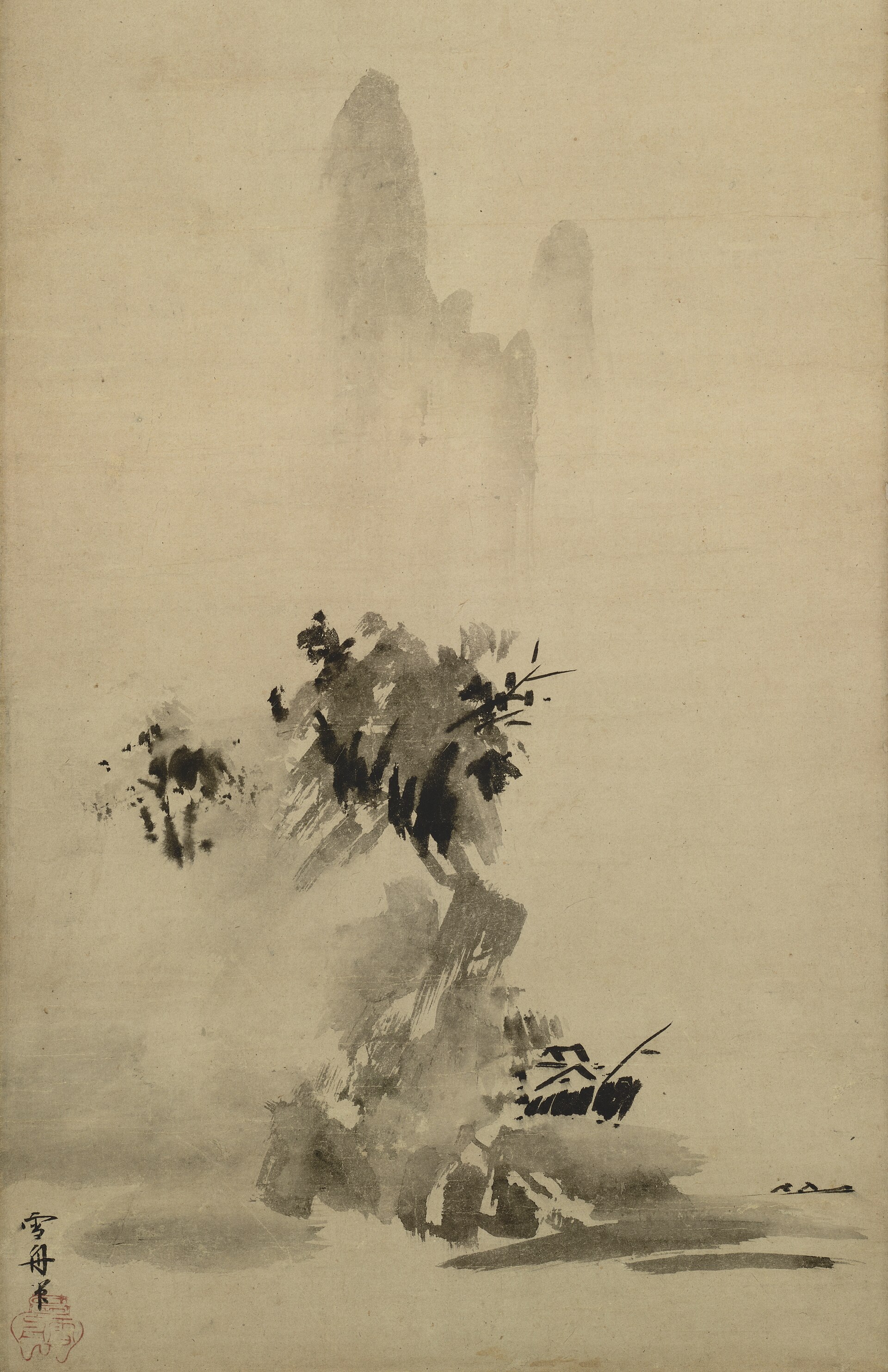
Sesshu Toyo is the canonical name for Muromachi-period ink landscape in Japan. A Zen monk-painter who traveled to Ming China, he returned with a harder, more structural brush than many of his contemporaries and set a standard later painters claimed as lineage.
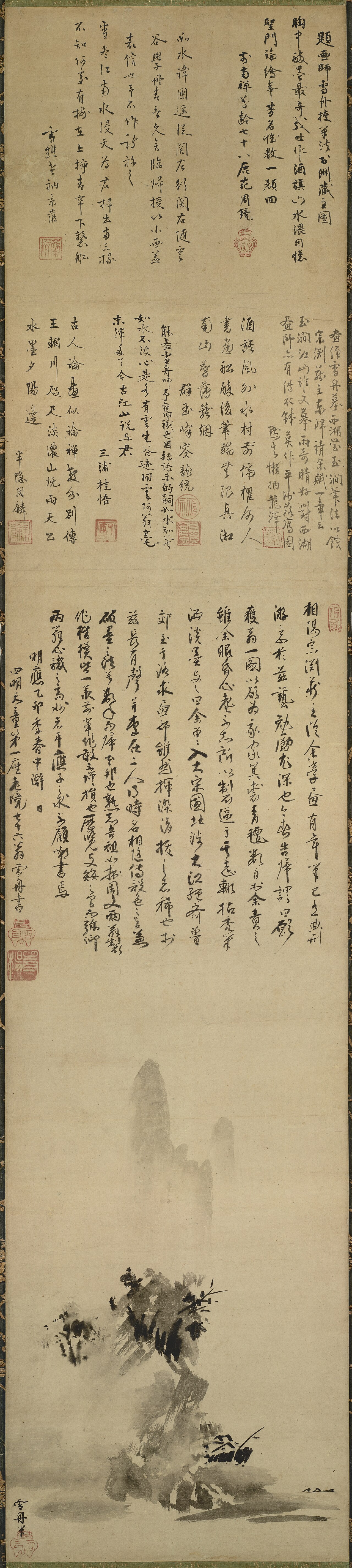
Look at the face of the work and the hand behind it. Scroll for life, lineage, and where American audiences met this name.
Life and work
Dates: 1420-1506. Place: Active in western Japan; studied in Ming China. Medium: Ink painting (suibokuga), Zen-associated landscape.
Born in 1420 in Bitchu Province (often given as Akahama), Sesshu trained in Zen Buddhist contexts and worked in workshops connected to major temples. Around 1468-1469 he traveled to Ming China, where he saw continental painting firsthand and received recognition at court circles. Back in Japan he worked especially in western Honshu, including Yamaguchi and the Unkoku area. He died in 1506. Exact workshop details remain partly shadowed by later legend, but major attributed works sit in Japanese temple and museum collections. Later biographers amplified Sesshu into a national saint of ink. Modern scholarship still sorts workshop hands, copies, and commemorative attributions, which is why teaching pages should say attributed when certainty thins. His China travel remains one of the clearest documented cases of a Japanese painter studying continental models on site in the fifteenth century.
Signature works
Widely cited works associated with Sesshu include the Landscape of the Four Seasons scrolls, the Haboku (splashed-ink) Landscape in Tokyo National Museum, and temple-related landscapes long attributed to him or his circle. Attribution debates continue in scholarship; teaching summaries treat the core corpus as public cultural property of Japanese art history.
Who they inspired
Later Japanese ink painters, including the Unkoku school that claimed his legacy, treated Sesshu as a patriarch. Edo-period collectors and Meiji museum builders kept him at the center of the national painting story. His synthesis of Chinese monumental landscape with Japanese brush economy shaped how Japanese ink painting was taught in the twentieth century. Screen painters and hanging-scroll artists quoted his angular rock structures for centuries. When Meiji museums built a canon of Japanese painting, Sesshu was already a required ancestor for anyone claiming seriousness in monochrome landscape.
American / US crossover
This is not a US-first story. Sesshu did not travel to America. American encounter happens through museum loans, East Asian art curricula, and major US collections of Japanese painting that include Muromachi ink works and reproductions used in teaching. Honesty requires saying the primary home of the story remains Japan. American collectors of Zen-related arts sometimes preferred later, softer ink painters; Sesshu's severity entered US teaching more slowly through academic East Asian art programs after World War II.
Era door: Courts and canons